

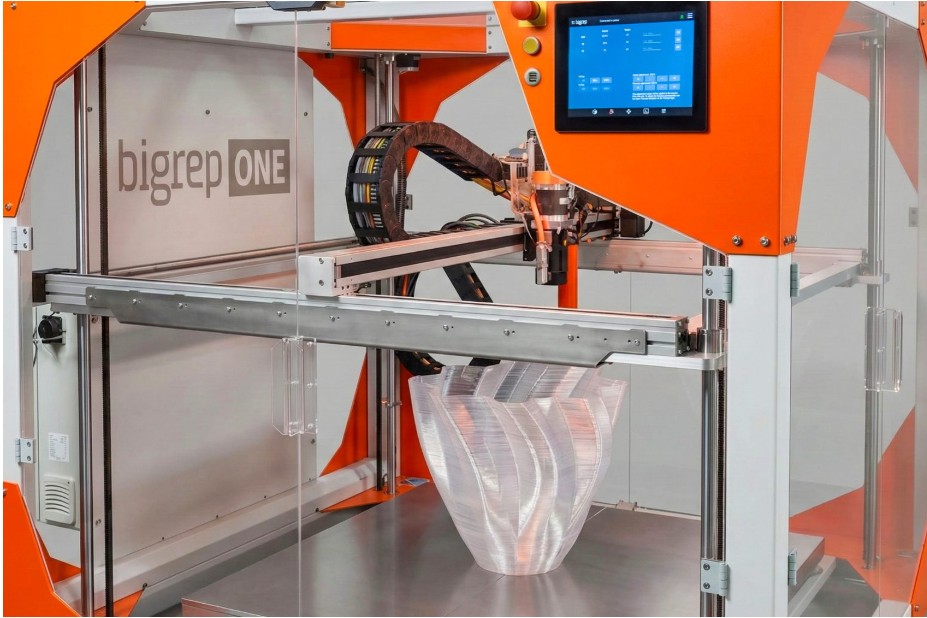
Industrial 3D printing is entering a new phase where the focus is shifting from producing prototypes to supporting continuous, large-scale manufacturing. The article from 3D Printing Industry Blog highlights several recent developments that demonstrate how additive manufacturing is becoming more autonomous, reliable, and capable of producing structural components suitable for demanding industrial applications. Rather than relying on constant operator oversight, the latest systems are designed to run for extended periods with minimal human intervention, helping manufacturers improve productivity and reduce operating costs.
One of the most significant trends is the rise of automated print farms that combine robotics, machine vision, and intelligent software to manage production workflows. These systems monitor print quality, remove completed parts, prepare printers for the next job, and detect failures before they disrupt production. Automation reduces downtime while allowing manufacturers to operate multiple printers simultaneously, making additive manufacturing a more practical option for high-volume production.
The article also points to advances in materials that expand the range of industrial applications. New engineering polymers and reinforced composites offer greater strength, heat resistance, and durability, enabling printed parts to perform in demanding environments. As a result, manufacturers are increasingly producing functional end-use components instead of limiting 3D printing to prototypes or tooling. These improvements make additive manufacturing a viable solution for sectors such as aerospace, automotive, defense, and industrial equipment.
Equally important is the maturation of software platforms that connect design, production scheduling, quality assurance, and machine management into a unified workflow. Digital process control allows manufacturers to track every stage of production, optimize printer utilization, and maintain consistent quality across large fleets of machines. This integration helps additive manufacturing fit more naturally into existing factory operations rather than functioning as a standalone process.
The article concludes that industrial 3D printing is no longer defined solely by faster printers or new materials. The industry’s progress now depends on combining automation, scalable production management, and high-performance materials into complete manufacturing systems. As these technologies mature, additive manufacturing is becoming an increasingly practical production method capable of operating with minimal supervision while delivering reliable, production-ready parts.
