

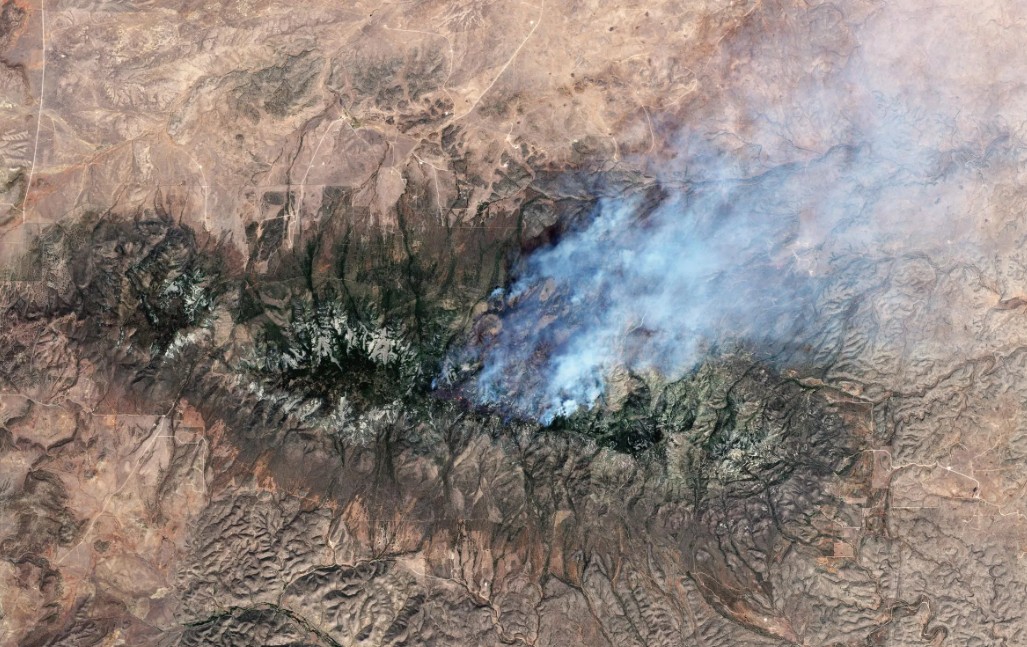
The U.S. National Transportation Safety Board (NTSB) is investigating whether military GPS jamming contributed to a fatal medevac aircraft crash in New Mexico in May 2026. The accident killed two pilots and two nurses and sparked a wildfire that burned for a month, tells IEEE Spectrum.
The aircraft was traveling from Roswell to Ruidoso to collect a patient when a pilot reported losing GPS capability shortly after takeoff. Three other aircraft also experienced problems. An air traffic controller asked nearby White Sands Missile Range to stop its GPS interference testing. The military briefly halted the jamming but resumed it after the controller reported that the medevac aircraft had visually identified its destination. Five minutes later, the plane struck a mountain.
The investigation marks the first time the NTSB has identified GPS jamming as a potential factor in an accident investigation. However, interference around White Sands is not new. Previous reports have described aircraft drifting off course, entering military airspace, and losing navigation capabilities during GPS tests.
The military conducts jamming and spoofing experiments at White Sands to prepare for GPS-denied environments. Powerful jammers can prevent civilian receivers from accepting deceptive spoofed signals, but the interference can extend hundreds of kilometers and even reach satellites in low Earth orbit.
The crash also highlights technological limitations in aviation equipment. FAA-certified navigation hardware generally relies on the GPS L1 frequency. Many modern consumer devices can access additional satellite navigation systems, including Galileo, BeiDou, and GLONASS, potentially making them more resistant to interference.
The crashed aircraft had another GPS-based tracking system that apparently performed better, possibly because it could access Galileo, but its location information was unavailable to the pilots.
The NTSB has not concluded that GPS jamming caused the crash. Investigators are examining avionics, weather, aircraft history, recorded data, operations, and air traffic control information. The case nevertheless underscores the challenge of balancing essential military electronic warfare testing with civilian aviation safety.
