

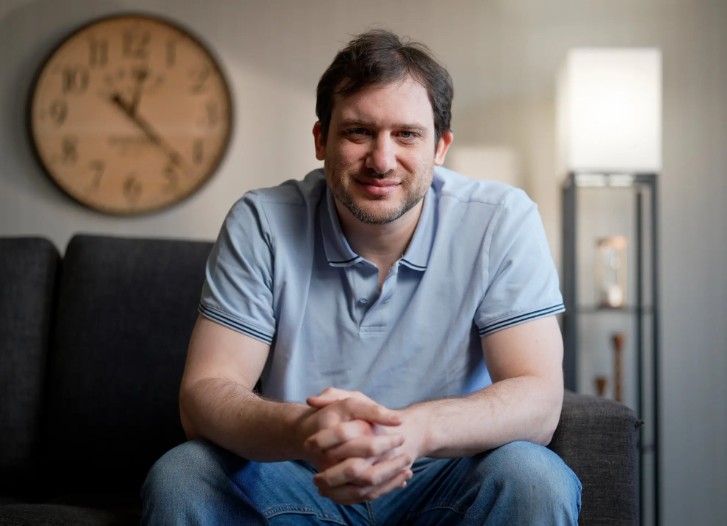
Jacob Tsimerman, a 38-year-old mathematics professor at the University of Toronto and one of this year’s Fields Medal recipients, is shifting his research from number theory toward the mathematical foundations of artificial intelligence. He believes mathematicians can help explain how AI systems work and provide the theoretical understanding needed to make them safer and more controllable, as he tells The New York Times (full article available to subscribers).
Tsimerman received the Fields Medal for his contributions to number theory, a field concerned with fundamental questions about numbers and their relationships. He describes the discipline as valuable not simply for producing answers but for generating questions that reveal connections across mathematics.
Fermat’s last theorem illustrates this process. Proposed in 1637 and finally proved by Andrew Wiles in the 1990s, the theorem inspired mathematical tools that later found applications in areas including string theory. Tsimerman argues that such problems are worth studying both for their inherent beauty and for the unexpected mathematical connections that emerge from solving them.
His own research has produced similarly significant results. In 2021, Tsimerman was part of a team that completed the proof of the André-Oort conjecture. His doctoral adviser, Princeton mathematician Peter Sarnak, described the achievement as one of the few cases in which fundamental higher-dimensional problems of this kind have been resolved.
Now, Tsimerman sees AI as an increasingly important mathematical challenge. He says AI has already doubled his productivity by summarizing research papers and preparing preliminary proof drafts. He expects the technology could soon surpass humans in performing some mathematical work.
At the same time, he considers AI a potentially serious threat to society and humanity. Large language models remain driven largely by empirical research and engineering rather than a complete theoretical understanding. Tsimerman believes mathematics can help change that by uncovering the principles behind these systems, potentially giving researchers better ways to understand their behavior, steer their development, and maintain control as their capabilities grow.
