

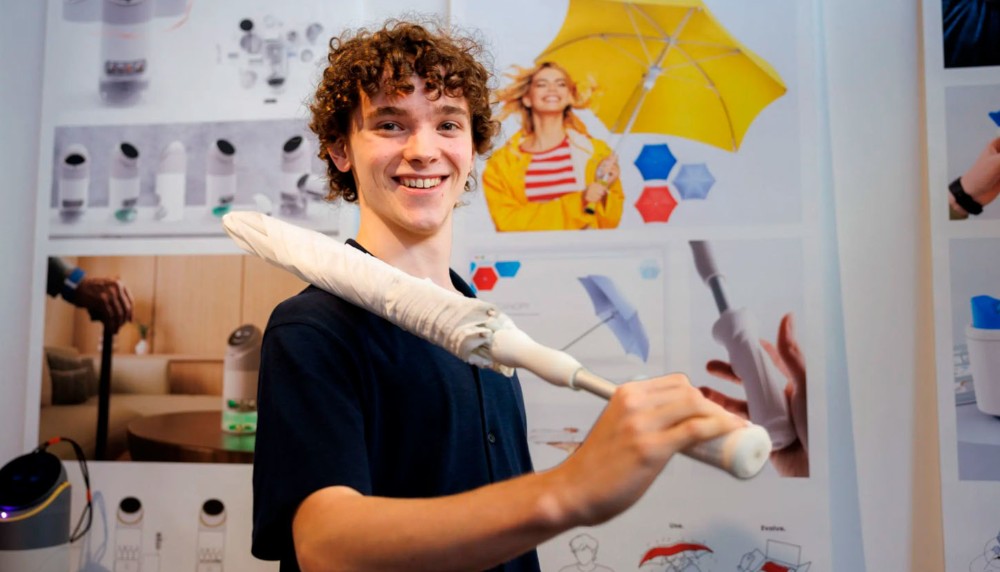
Develop 3D’s selection from New Designers 2026 event highlights five graduate projects that combine practical problem-solving, technical development, and careful attention to user needs. Selected from the UK’s leading graduate design event, the projects demonstrate how emerging designers are approaching sustainability, health care, consumer products, and emergency equipment.
Tom Price of the University of Leeds developed Canopy, a modular, repairable, and fully recyclable umbrella. Rather than simply replacing conventional materials, Price examined the causes of umbrella waste and designed components for easier repair, disassembly, recycling, and scalable manufacturing. His project included CAD models, renders, a bill of materials, and a proposed business model.
University of Sussex graduate Joshua Bragg created Clear, a connected device for monitoring concussion recovery. It tracks physiological information from the brain, eyes, and autonomic nervous system, giving athletes, coaches, and clinicians more objective information for assessing recovery and making return-to-play decisions. A smartphone app presents the collected data and guidance.
Samuel Collins of Sheffield Hallam University designed Nata, a modular community midwifery kit intended to simplify home visits. The system organizes essential equipment, including oxygen canisters and integrated newborn weighing scales. Iterative prototyping and user feedback helped Collins refine workflows and reduce the physical and cognitive demands placed on midwives.
Millan Minter of Aston University tackled coffee capsule waste with UnoPod. The countertop device grinds fresh beans and automatically fills reusable capsules with a precise serving, combining the convenience of pod machines with reduced waste. Extensive testing of existing coffee grinders informed the working prototype.
Finally, Bournemouth University graduate Rupert Murphy developed Re-Warm for cold-water rescue. Created with input from the RNLI, the compact device delivers warmed, humidified air to people experiencing cold-water immersion, providing active rewarming before hospital treatment. Together, the five projects show the value of research, prototyping, user feedback, and engineering discipline in developing products aimed at real-world needs.
