

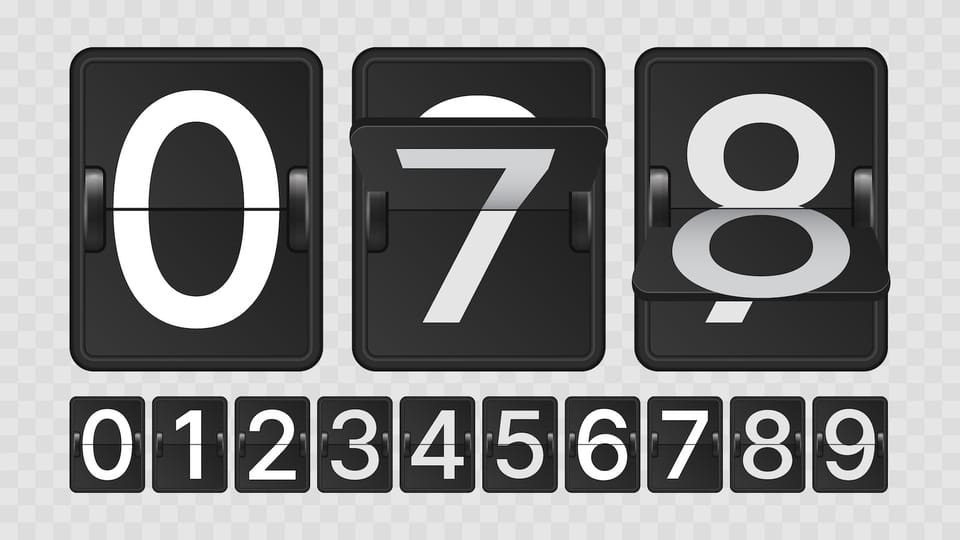
The second installment of Design News’ retrospective on historic display technologies explores the inventive ways engineers communicated information before the arrival of modern electronic displays. Long before LCDs, OLEDs, and LED panels became commonplace, engineers developed a variety of mechanical and electromechanical systems that served as the first practical digital displays.
Among the earliest examples were mechanical counters and registers, which emerged during the early-to-mid 19th century. Used in gas, water, and electricity meters, these devices relied on gears, ratchets, springs, and numbered drums to display cumulative measurements. Similar mechanisms appeared in factories and industrial facilities, where tally counters tracked machine cycles, production volumes, and other operational data. Their ability to retain information without electrical power made them remarkably reliable and practical.
As electrical systems became more complex, electromechanical annunciators emerged during the late 19th and early 20th centuries. These devices displayed warning messages such as “FAULT” or “ALARM” when triggered by an electrical signal. Often accompanied by bells or buzzers, annunciators provided persistent visual alerts, ensuring important events were not overlooked. Their bistable nature meant they required power only when changing state, a principle that remains relevant in modern system design.
The article also examines solenoid-driven numeric indicators, which combined electrical signaling with mechanical displays. Widely used between the 1920s and 1950s, these systems employed electromagnets to advance numbered drums and counters. Beyond displaying information remotely, they effectively acted as memory devices because the displayed value remained visible even after power loss.
The centerpiece of the article is the split-flap display, which dominated transportation hubs from the 1950s through the 1980s. Popularized by Italy’s Solari di Udine, these displays used rotating drums filled with character-bearing flaps to present schedules and travel information. Their distinctive click-clack sound became synonymous with railway stations and airports. Although largely replaced by electronic displays, split-flap systems remain beloved by collectors and hobbyists, inspiring modern recreations such as those produced by Oat Foundry.
Together, these technologies demonstrate the ingenuity of earlier engineers, who created sophisticated and durable information displays decades before the digital age.
