

Space agencies are testing generative AI where delays and unpredictable conditions make direction from Earth impractical. IEEE Spectrum describes experiments that keep people involved. NASA’s Jet Propulsion Laboratory used Anthropic’s Claude to plan two drives for the Perseverance rover, with engineers reviewing the routes before transmission. NASA and IBM tested a compressed model in orbit to identify floods and clouds, while astronauts tried a language model for maintenance questions.
These trials represent a shift from spacecraft following predetermined commands toward systems that can interpret conditions and plan responses. That flexibility complicates verification. Robert Ambrose, a former NASA robotics leader, explains that autonomous behavior can depend on the path a machine took to reach a situation. Engineers must test many histories, not only an expected outcome. At distant destinations such as Jupiter’s moon Europa, communication delays could leave a spacecraft needing to react to a water plume before instructions arrive from Earth.
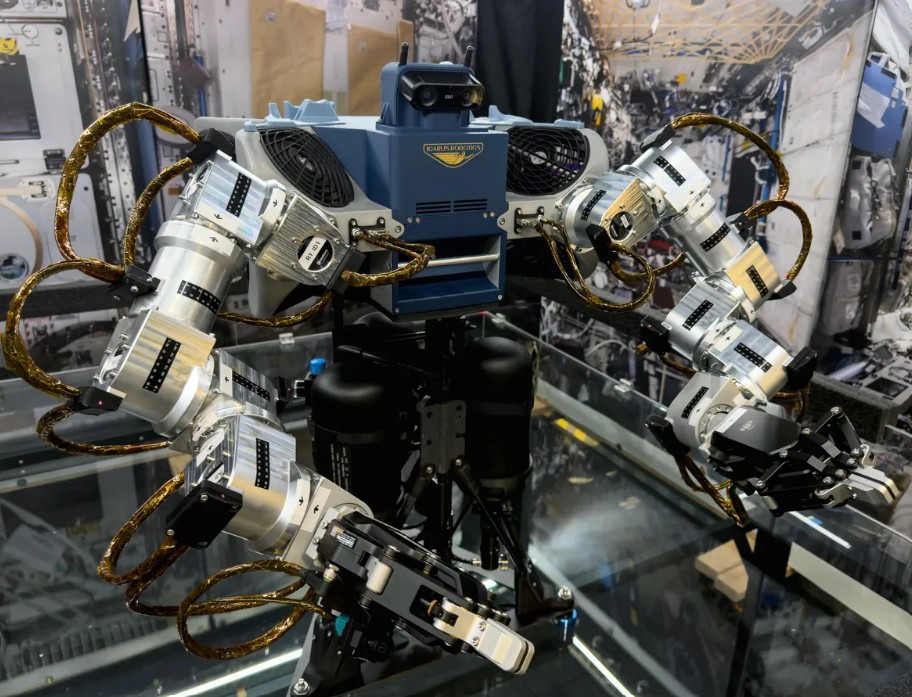
Orbital robots pose another challenge: models trained under Earth’s gravity may behave poorly in microgravity. Icarus Robotics is developing Joy, a free-flying robot intended to move cargo aboard the International Space Station. Its team plans to begin with human teleoperation and build autonomy from those demonstrations. Because orbital training data are scarce, the company is combining microgravity experiments, simulations, and ground tests.
The article cautions that more autonomy does not mean handing control over immediately. Ufuk Topcu, an engineering professor at the University of Texas at Austin, argues for deploying AI first in restricted tasks, observing its behavior, and expanding its responsibilities as engineers learn to manage risk. That approach matters as commercial missions multiply and spacecraft become more complex.
Generative AI could help machines make timely decisions far from Earth, but the examples remain trials. Their value will depend on reliable testing, training data, and defined human oversight.
