

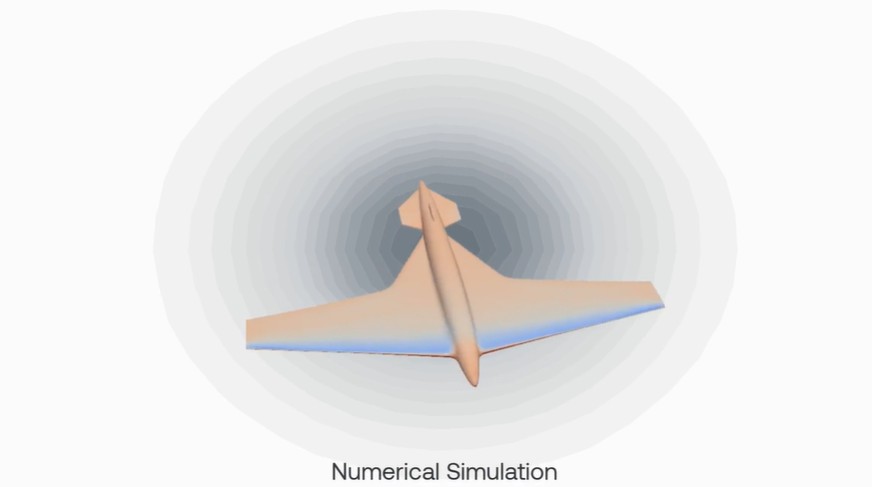
Engineering optimization has traditionally depended on parametric CAD, where designers define a limited set of variables and search for the best combination. PhysicsX argues that this approach constrains exploration because even fast simulation can only evaluate geometries permitted by the original CAD parameterization. The company is investigating generative optimization as a way to expand that design space.
The approach adapts pretrained 3D foundation models, originally developed for creating visual assets, to engineering geometry. PhysicsX uses TRELLIS.2 as an example. Through Low-Rank Adaptation, or LoRA, the team fine-tunes large models using relatively small engineering datasets. The method can generate new geometries that incorporate meaningful variations rather than simply reproducing training examples.
Generated geometry presents another challenge. Models may produce meshes with defects that prevent direct use in numerical simulation. PhysicsX therefore applies geometry-processing pipelines to convert generated shapes into meshes suitable for production-grade solvers and potentially 3D printing.
Instead of searching for one optimum geometry, generative optimization creates a distribution of promising designs. Engineers can steer generation toward objectives such as lower mass, improved aerodynamic performance, or specific physical properties. PhysicsX explores several methods, including classifier-free guidance, reward gradients, surrogate physics models, and optimization that places numerical simulation directly in the loop.
One demonstration uses the SimJEB jet-engine bracket dataset. Starting from the previous competition-winning design, PhysicsX reports generating a new bracket that is 18.5% lighter while remaining within the titanium yield-stress constraint. The process required neither CAD parameters nor a surrogate model.
The broader goal is to connect geometry generation, physics AI, and numerical simulation. Such workflows could support optimization, inverse design, generative editing, and synthetic data generation. Challenges remain, particularly manufacturability, mesh representations, engineering-grade benchmarks, and integration with existing CAD workflows.
