

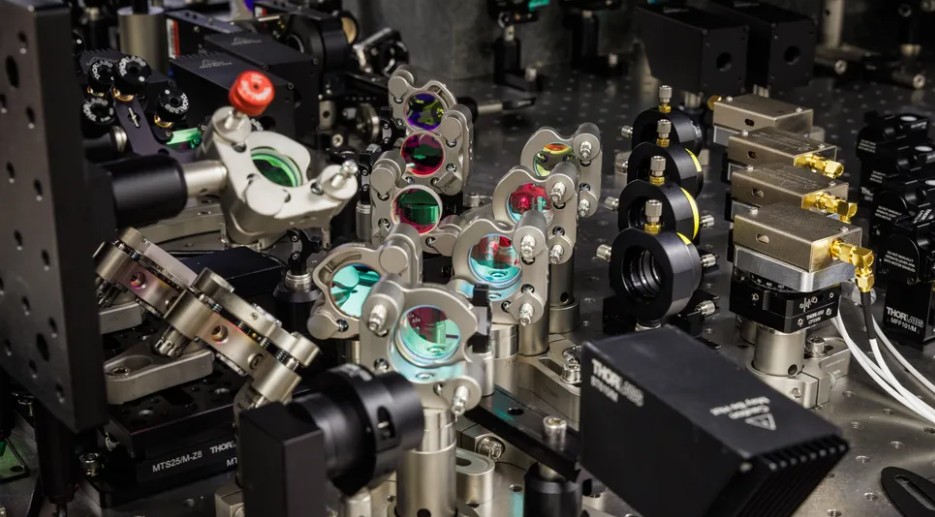
Microsoft researchers have announced a significant leap in long-term data storage: encoding digital information into ordinary borosilicate glass in a way that could preserve it for over 10,000 years. This comes from an improvement on the company’s Project Silica research, outlined in Nature, that applies advanced laser writing and reading techniques to embed data deeply inside glass. Previous efforts used expensive fused silica; the new work shows similar storage capabilities on borosilicate glass—the same material found in common kitchenware—making the medium far more affordable and accessible, tells Live Science.
In the demonstration, researchers stored 4.8 terabytes of data, roughly the equivalent of 200 4K movies, in a 2-mm-thick glass plate with 301 layers of data. The process uses femtosecond laser pulses to write tiny three-dimensional structures called voxels inside the glass; later, a microscope and decoding algorithms retrieve the information. Writing speeds are modest, that is, about 3.13 megabytes per second, slower than conventional hard drives, but the main goal isn’t speed. Instead, it’s durability: traditional hard drives and solid-state drives typically last about a decade before risking data loss, while glass storage could remain intact for millennia.
What makes this approach compelling is the stability of the medium and the elimination of moving parts or magnetic components susceptible to decay. In accelerated aging tests, data in glass remained legible far beyond the projected 10,000-year mark, even though real-world testing over such time spans isn’t feasible. These qualities position laser-etched glass as an archival storage option for preserving critical historical records, cultural works, scientific data, and other long-lived information.
Despite its promise, the technology isn’t ready for everyday consumer use: write speeds and specialized equipment remain limiting factors. Still, by reducing costs and broadening material choices, Project Silica’s glass-based storage sets a path toward preserving humanity’s digital legacy in a way that far outlasts existing storage media.
