

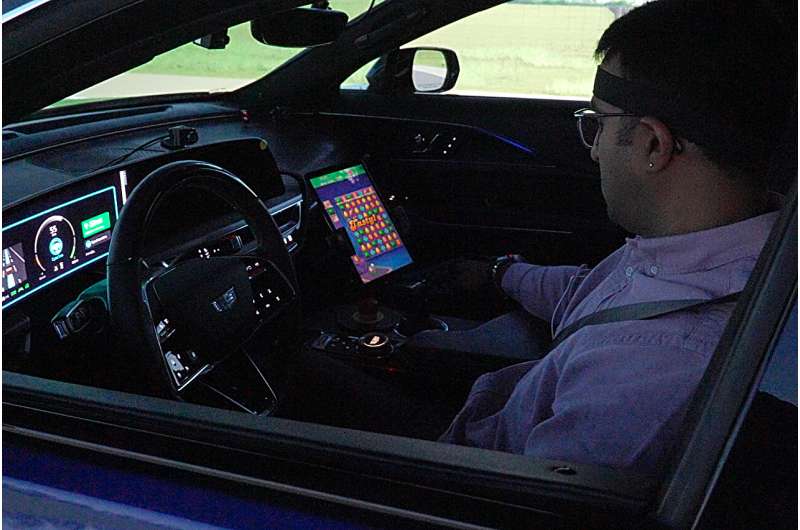
General Motors is using immersive simulation to develop advanced driver-assistance technology that could eventually let drivers take both their hands off the steering wheel and their eyes off the road. At GM’s Global Technical Center in Warren, Michigan, volunteers drive real vehicles, including the Cadillac Lyriq, inside a 360-degree simulated environment, tells Tech Xplore.
The simulator exposes participants to highways, city streets, hills, construction zones, rain, traffic, and unexpected hazards. Researchers monitor eye movement, heart rate, stress, attention, and other responses. They also study how quickly drivers can regain control when prompted and whether warnings provide enough time for a safe transition.
GM currently offers Super Cruise, which enables hands-free driving but requires drivers to keep watching the road. Available across more than 20 models from Cadillac, GMC, Buick, and Chevrolet, Super Cruise operates on more than 630,000 roads in the United States and Canada. GM plans to introduce its next-generation system with eyes-off capability on the Cadillac Escalade IQ in 2028.
Simulation is central to that effort because autonomous systems must respond safely to situations that are difficult to reproduce consistently on public roads. These include animals or pedestrians suddenly entering traffic, unexpected detours, and changing construction zones. GM combines simulated scenarios with data collection and AI to evaluate both vehicle behavior and human reactions.
Researchers even use Candy Crush to deliberately distract participants, helping them measure how effectively drivers disengage from another activity when the vehicle requests attention.
GM is not alone in pursuing more automated driving. Ford offers BlueCruise, while Tesla’s Full Self-Driving still requires driver supervision. No production passenger vehicle currently provides broad eyes-off driving.
Beyond technical development, regulatory approval remains a significant hurdle. For automakers, however, eyes-off capability could create a valuable subscription business by giving drivers usable time during journeys.
