

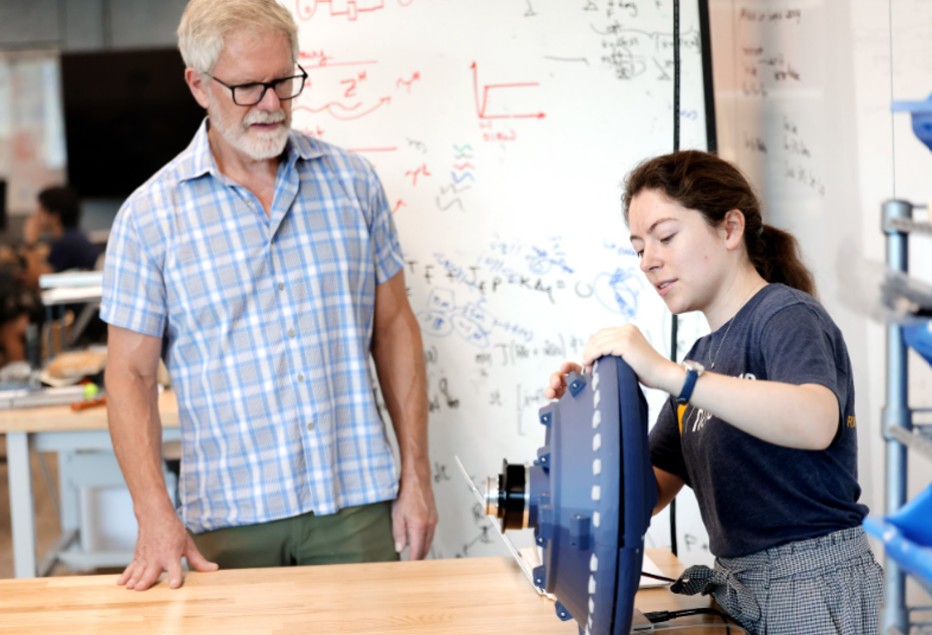
Researchers at the University of Michigan are developing a haptic steering wheel designed to reduce conflicts between drivers and semi-autonomous vehicle systems. Instead of forcing drivers to accept automated steering decisions or switch assistance systems off, the concept allows humans and automation to communicate through touch, tells Forbes.com.
The experimental steering wheel contains inflatable bladders and bubbles that expand or deflate to indicate what the automated system intends to do. A driver can squeeze a bladder to disagree with a proposed maneuver. The automation can then accept the request or provide tactile feedback indicating why its preferred action should continue.
Hannah Baez, a doctoral student in robotics, developed the system with professor Brent Gillespie and other researchers. The work received funding and collaboration from the Toyota Research Institute. Their goal is to make drivers and automated systems behave more like teammates rather than competing controllers.
Researchers tested the concept with 30 participants completing 39 turns at simulated intersections. The experiment compared three conditions: two-way communication between driver and automation, one-way communication from the automation, and no communication.
Two-way interaction produced significantly better driver performance when the intentions of the driver and automated system differed. Researchers also found that participants swerved less when they could negotiate with the system through haptic feedback. Participants rated their trust in automation after every three turns, allowing the researchers to examine the relationship between communication and confidence in automated systems.
The research addresses a growing human–machine interaction challenge as vehicles adopt more driver-assistance technologies. Drivers may disable features such as lane centering when automated steering feels intrusive or unpredictable.
The haptic interface suggests another approach. Instead of automation silently taking control, vehicles could communicate their intentions and give drivers a physical way to respond. The research is currently without funding after several years of Toyota support, leaving its next development phase uncertain.
