

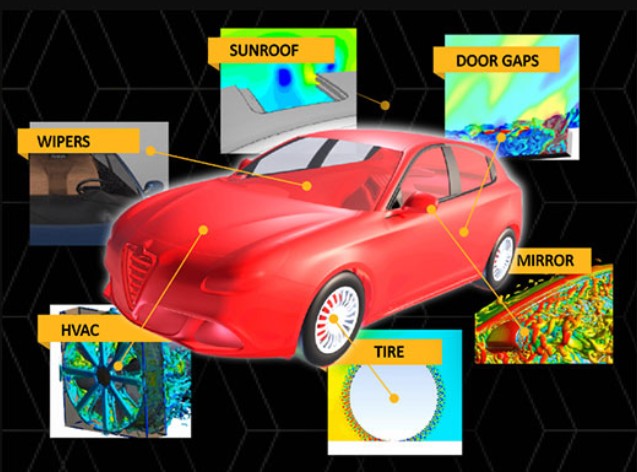
The transition from internal combustion engines to electric vehicles is transforming not only automotive propulsion but also the acoustic experience inside a vehicle. As engine noise fades, previously masked sounds such as wind turbulence, tire interactions, cabin vibrations, and electronic alerts become far more noticeable. This shift has elevated acoustic engineering from a secondary design consideration to a critical component of vehicle development, says Digital Engineering 24/7.
Modern vehicles, particularly premium models, feature sophisticated audio systems with numerous strategically positioned speakers, including units embedded in seat headrests. At the same time, electric vehicles introduce new challenges. Their quiet operation improves passenger comfort but can reduce pedestrian awareness, leading regulators to require minimum external sound levels for hybrid and electric vehicles.
To address these challenges, automakers increasingly rely on acoustic simulation rather than traditional prototype-based testing. Advances in computing power and physics-based modeling allow engineers to predict, visualize, and even listen to the acoustic characteristics of a vehicle cabin before a physical prototype exists. Simulation platforms from companies such as Dassault Systèmes, Ansys, and COMSOL enable engineers to analyze structural vibrations, aerodynamic noise, electromagnetic effects, and sound propagation throughout the vehicle.
Acoustic simulations examine how various sound sources, including wind, rain, road noise, powertrains, conversations, music, and warning signals, interact with the cabin environment. Engineers evaluate sound pressure levels, frequency responses, resonance effects, and impulse responses at key listening positions, particularly around the driver and passengers. The software can generate audio files that allow designers to hear simulated cabin acoustics and assess sound quality long before manufacturing begins.
The process relies on detailed CAD models, material properties, and multiphysics analysis to accurately represent sound reflection, absorption, scattering, and transmission. Engineers can then optimize speaker placement, interior materials, insulation, and noise-cancellation strategies to achieve more uniform sound distribution and improved passenger comfort.
As vehicles become increasingly connected, autonomous, and voice-controlled, acoustic engineering is expanding beyond noise reduction. Future vehicles must not only sound better but also listen more effectively, enabling personalized interactions and safer operation. Acoustic simulation is becoming an essential tool for creating the next generation of intelligent mobility experiences.
