

SHANGHAI, China, Aug 4, 2025 – Hesai Technology is partnering with Agtonomy and Alpha Werke to equip autonomous farming robots with its JT series lidar sensors. This collaboration aims to advance precision farming by combining lidar’s real-time perception with robotic automation, addressing labor shortages and operational challenges in agriculture.
Lidar: The Eyes of AI “Farming Agents”
Farming drives global economy, supports food production, supply chains, and communities. Yet, the industry faces challenges like labor shortages, rising operational costs and unpredictable weather. Farmers are being pushed to produce more with scarcer resources. To meet these demands, the future of agriculture will rely on physical AI – autonomous farming robots that work nonstop and adapt to complex, changing environments.
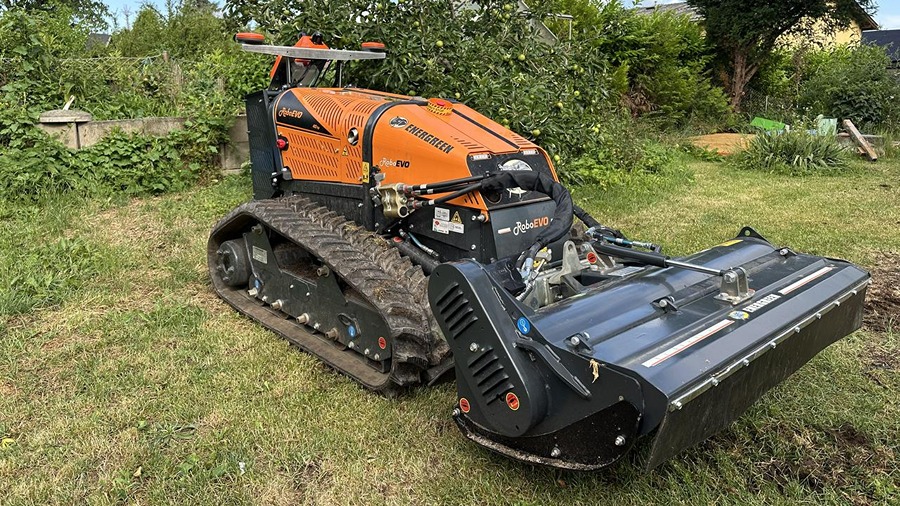
At the heart of this transformation is lidar – a sensing component that acts as the eyes of AI “farming agents”, enabling autonomous farming robots the spatial awareness they need to safely and accurately perform repetitive, labor-intensive tasks such as mowing, spraying, weeding, and hauling.
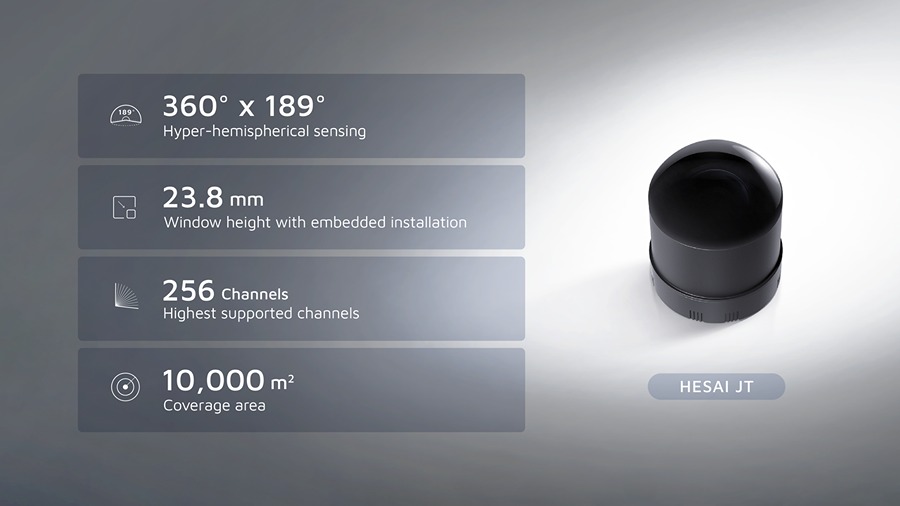
Hesai’s JT series – mini hemispherical 3D lidar sensors are designed with robotics applications. They combine environmental perception with a robust design that’s best-fit for autonomous farming.
- Powerful perception: JT series lidar sensors deliver a wide field of view, scanning areas equivalent to two football fields with real-time 3D data. This gives AI systems to track crop loads, map terrain, and detect obstacles promptly. With zero-meter minimum detection, these sensors let farming robots navigate tight spaces and execute close-range tasks with zero blind spots.
- Compact size: JT series lidar sensors are 70% smaller in volume, allowing for integration into various autonomous farming robots. With a surface height of less than 30 mm, these sensors can be installed on equipment ranging from low-profile weeding machines to high-clearance sprayers, supporting a range of farming equipment.
- Robust reliability: JT series lidar sensors emits laser light, making them immune to changes in ambient lighting. This ensures stable performance in farming environments, whether in daytime or at night. The sensors have passed durability tests, including IPX6 waterproofing, vibration and shock resistance, UV exposure, and temperature cycles, proving their ability to operate in harsh field conditions.
What the Leaders Are Saying
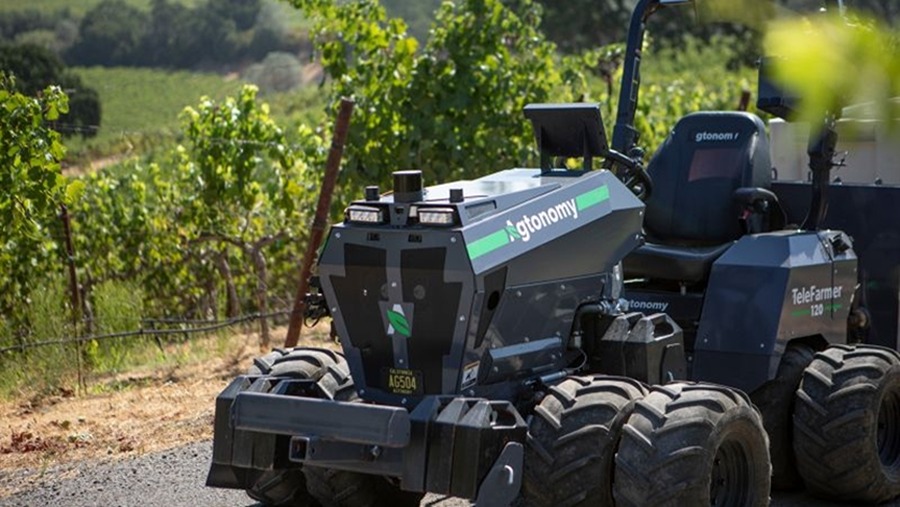
“The seamless integration of Hesai’s lidar into Agtonomy-enabled tractors has significantly enhanced precision automation in agriculture. Hesai’s sensors provide reliable navigation, even in the most challenging conditions. Paired with our software, they allow us to automate numerous tasks – delivering an affordable and scalable solution for modern farms,” says Tim Bucher, CEO and co-founder, Agtonomy.
“Powered by Hesai’s lidar, we’re bringing autonomy to places GPS can’t reach – dense forests, orchards, and solar farms. Its reliability and precision make Hesai an ideal partner for farming robots where safety, efficiency, and robust performance matter most,” says Patrick Neuhauser, CEO of Alpha Werke.
Empowering the Future of Farming, One Sensor at a Time
As labor shortages and rising expenses strain agriculture industry, AI-driven automation is moving to the forefront. By June 2025, Hesai had shipped more than 100,000 JT lidar units. The company’s lidar sensors support farming robots, helping farmers increase operational efficiency. Hesai is working with technology partners to address changing demands in the agricultural sector.
Source: Hesai Technology
About Hesai Technology

Founded in 2014 and headquartered in Shanghai, China, Hesai Technology is a provider of three-dimensional light detection and ranging (LiDAR) solutions. The company develops, manufactures, and sells LiDAR products for a wide range of applications, including advanced driver assistance systems (ADAS) for passenger and commercial vehicles, autonomous driving, and robotic platforms such as last-mile delivery robots and automated guided vehicles (AGVs). Hesai supplies ADAS LiDAR to six of the top 10 global OEMs by revenue and holds the No. 1 position in the global ADAS LiDAR market with a 26% market share. As of 2023, the company employs more than 1,100 people and operates offices in Shanghai, Palo Alto, and Stuttgart, serving customers in over 40 countries. Hesai reported approximately $250 million in revenue in 2023. The company integrates in-house manufacturing with LiDAR R&D to accelerate product iteration and ensure high performance, quality, and affordability.
About Agtonomy

Agtonomy, founded in 2021 and headquartered in South San Francisco, CA, develops software and AI solutions that bring autonomy to agricultural and land maintenance equipment. The company partners with equipment manufacturers like Doosan Bobcat and Kubota to transform traditional tractors and machinery into autonomous or remotely operated vehicles. Agtonomy’s platform enables tasks such as mowing, spraying, weeding, and material transport to be performed with minimal human intervention, helping specialty crop growers, vineyards, orchards, berry farms, and turf operations improve efficiency, safety, and sustainability. The company employs between 60 and 100 people and generates an estimated $30M annual revenue. Agtonomy’s third-generation platform, launched in 2025, offers remote control and fleet management via mobile apps without pre-mapping or base stations. The company is expanding its market presence through pilot programs, grower partnerships, and rental services.
About Alpha Werke
Alpha Werke, headquartered in Austria, develops hardware and software solutions for surveying, agriculture, mapping, and drone-based inspection. A division of General Laser, the company offers products such as TracPilot Alpha and Omega autonomous guidance systems for tractors, GLR and GLRM multi-band RTK receivers with tilt compensation, and GLidar mobile LiDAR scanners capable of capturing up to 5.2 million points per second. Alpha Werke also provides Agrowing multispectral imaging systems for crop monitoring and offers integration services including system design, data fusion, hydraulics, and control engineering. The company serves specialty agriculture, surveying, aerial mapping, and inspection industries. With its focus on autonomy and precision sensing technologies, the company is expanding through partnerships and system integration projects.
