

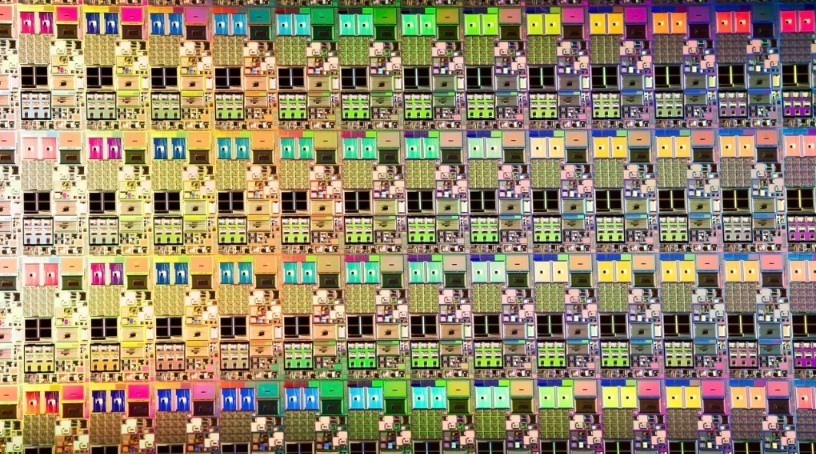
Huawei has introduced Peerium, a new computing architecture designed to make up to one million artificial intelligence (AI) chips operate as a single computer. Unveiled at Huawei CONNECT 2026 recently, the technology aims to overcome communication bottlenecks in large AI computing systems and support increasingly complex AI models, tells Live Science.
Traditional AI computing clusters distribute workloads across processors housed in separate servers. However, communication delays between these processors can limit performance as systems expand. Peerium addresses this challenge through three technologies: nested parallelism, unified memory addressing, and peer-to-peer interconnects.
Nested parallelism divides computational workloads into smaller tasks distributed across groups of processors. Unified memory addressing allows processors to access memory resources across multiple servers, while peer-to-peer interconnects enable direct communication between components. Together, these technologies are designed to improve resource utilization and processing efficiency.
Central to Peerium is Huawei’s proprietary UnifiedBus interconnect technology. According to Huawei, UnifiedBus delivers inter-rack communication bandwidth of up to 800 gigabytes per second, compared with the 200 gigabytes per second cited for configurations combining Nvidia’s NVLink and InfiniBand technologies.
Huawei claims that Peerium-powered systems could train AI models containing up to 40 trillion parameters, significantly exceeding the trillion-parameter scale associated with some existing AI hardware.
The company also announced the Atlas 950 SuperPoD, featuring more than 8,000 Ascend 950DT AI accelerators. Huawei expects to begin supplying these systems by early 2027. Meanwhile, a larger SuperCluster containing 256,000 computing cards is undergoing deployment and testing.
The architecture could reshape large-scale AI infrastructure by enabling more processors to collaborate efficiently. However, its million-chip capability remains an ambitious target rather than a demonstrated achievement. Successful deployment could strengthen Huawei’s position in AI computing while supporting increasingly demanding AI training and inference workloads.
