

Balin Moher’s career in aerospace began with a childhood experience watching a space shuttle launch from Cocoa Beach. That moment inspired him to pursue rocket engineering, a path that eventually led him to Reaction Dynamics, a Montreal-based company developing next-generation hybrid rocket propulsion systems for small and medium-sized launch vehicles, tells Design News.
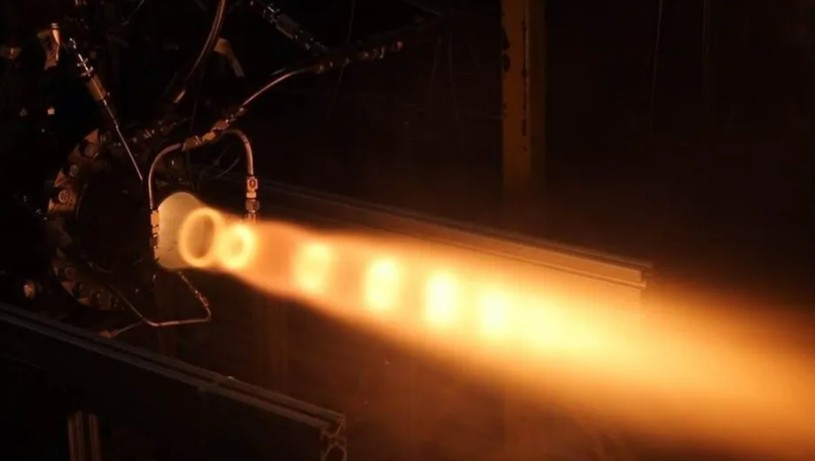
At the Siemens Realize conference, Moher described how Reaction Dynamics is tackling one of the longest-standing challenges in hybrid rocket propulsion. Hybrid rockets combine the simplicity and efficiency of solid-fuel systems with the controllability of liquid rockets. However, traditional hybrid engines suffer from a declining thrust curve as the fuel burns, reducing combustion efficiency and making orbital missions difficult. Reaction Dynamics has developed a new propulsion architecture designed to deliver stable thrust throughout the burn while using only a single liquid oxidizer tank and significantly less plumbing than conventional liquid-fueled systems.
The company’s Aurora 8 launch vehicle is designed to carry approximately 200 kilograms of payload to orbit, targeting a market where traditional liquid rocket systems are often too costly and complex. Reaction Dynamics also uses storable propellants, including liquid hydrogen peroxide, enabling rockets to remain fueled for extended periods. Combined with containerized launch infrastructure, this approach could support rapid-response launches from remote locations.
Central to the company’s development process is a digital twin strategy built on Siemens software. Engineers use NX Design Center for design, Simcenter STAR-CCM+ for computational fluid dynamics simulations, and Teamcenter for configuration and data management. This integrated workflow allows the team to model combustion behavior, validate designs through testing, and continuously refine virtual models using real-world performance data.
Moher also highlighted the growing role of artificial intelligence in engineering. Inspired by generative AI, he has been exploring tools that connect engineering knowledge, simulations, and design systems to automate routine tasks and accelerate decision-making. The goal is to reduce development cycles from weeks or months to hours while maintaining traceability and engineering rigor.
For Moher, the mission extends beyond launching rockets. He argues that space technology provides critical insights into climate change, environmental monitoring, and Earth’s overall health, making space exploration an essential tool for understanding and protecting the planet.
