

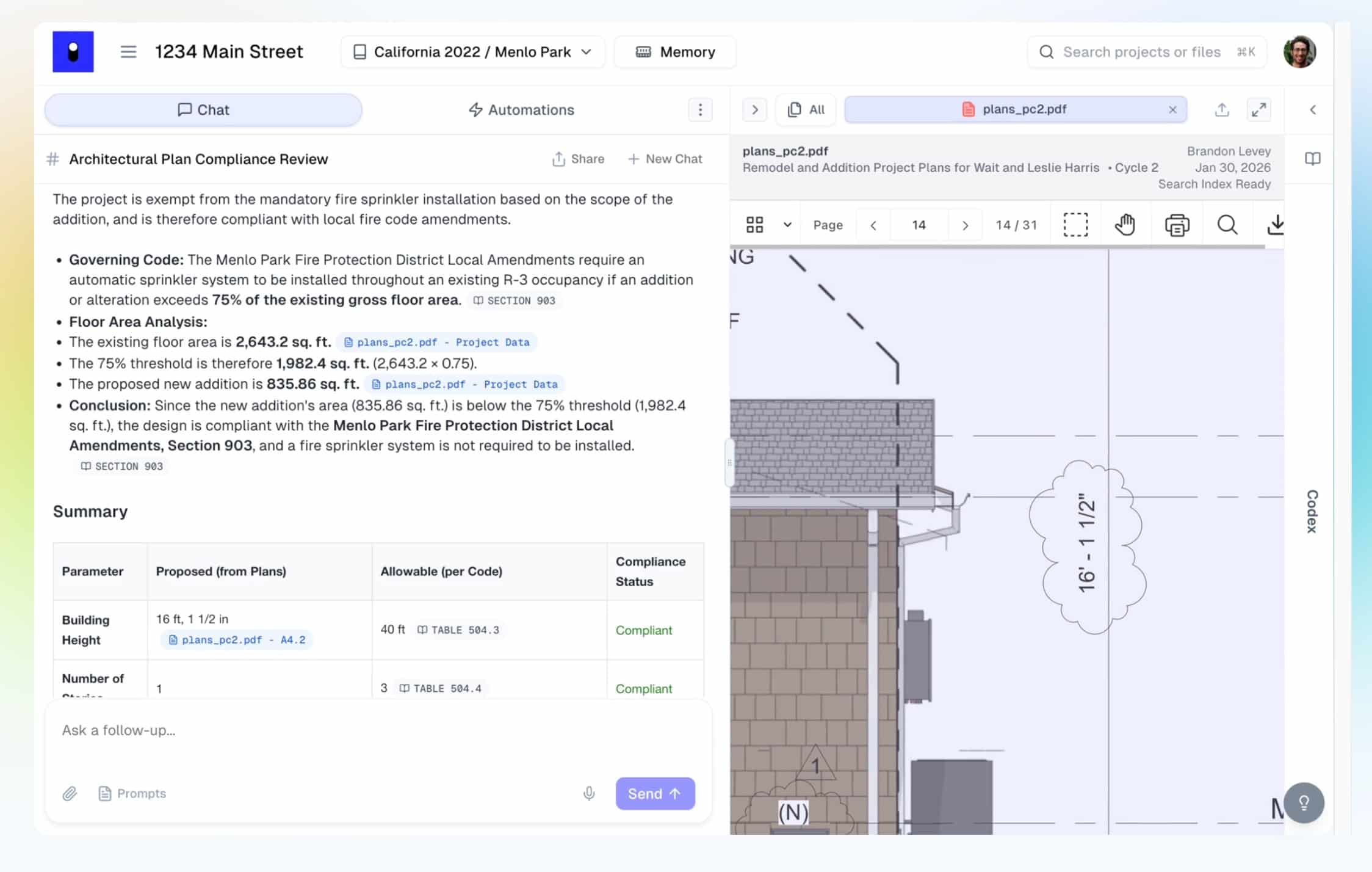
Ichi is an AI-powered platform that automates quality assurance, quality control, and construction administration reviews for architecture, engineering, and construction projects. Founded in 2024, the software aims to help professionals identify documentation problems earlier, when they are generally easier and less expensive to correct, tells Architosh.
The platform analyzes architectural drawing sets, specifications, construction documents, and other project information. It searches for missing details, scope gaps, conflicts, and discrepancies across sheets and documents. By identifying these issues before documents reach clients, consultants, or construction teams, Ichi can help architects produce more complete and coordinated project documentation.
Code compliance is another major application. Ichi checks documents against a large library of International Code Council-licensed building codes, including the International Building Code, International Energy Conservation Code, and accessibility requirements, along with regional amendments. Rather than functioning as a general-purpose AI model, the system operates within a controlled workspace built around project information.
Ichi also extends AI-assisted review into construction administration. It can examine submittals, requests for information, and construction documents to determine whether information conforms to requirements, identify missing material, and highlight items requiring professional attention. Users can upload project documents or connect Ichi with Procore. For RFIs, the software gathers relevant context, including previous responses, reducing the manual work needed to research each request.
Architosh notes an important distinction between Ichi and QA/QC tools embedded directly within BIM applications such as Revit. Because Ichi works with uploaded documents, it can serve firms, consultants, construction managers, jurisdictions, and reviewers regardless of their primary design software.
The platform does not replace the professional responsibilities of licensed architects and engineers. Instead, its value lies in accelerating document-intensive reviews while potentially helping professionals conduct more thorough checks across increasingly complex project information.
