

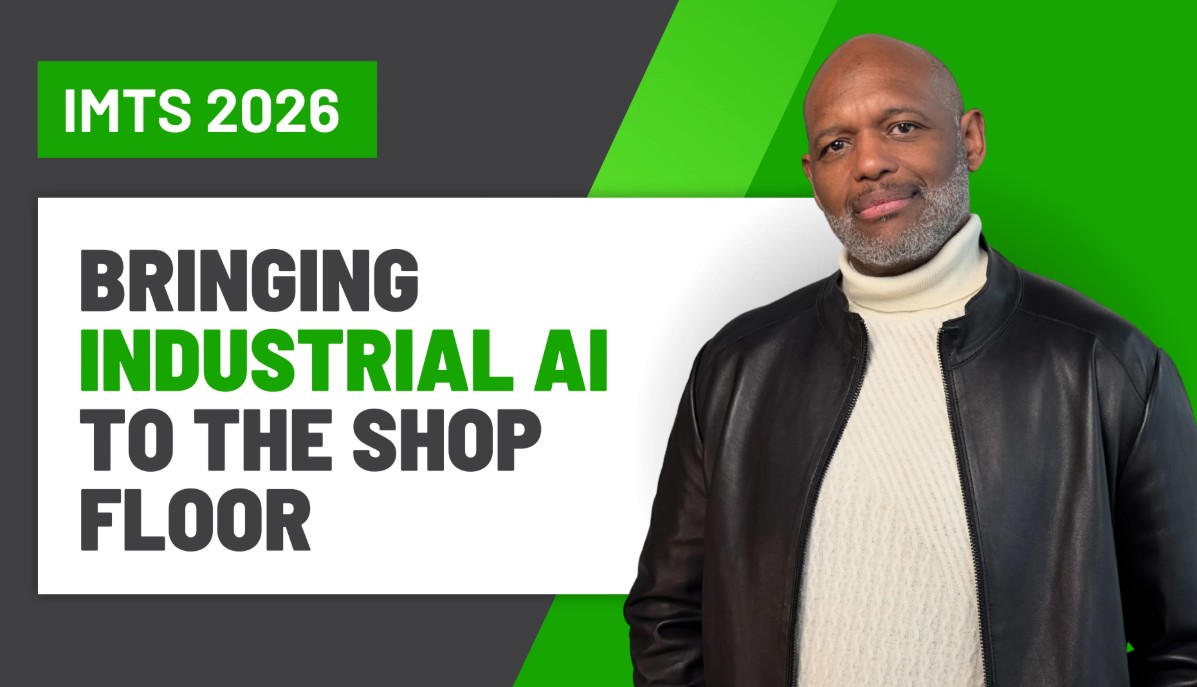
Artificial intelligence can deliver practical value in machine shops, but only when it understands what is actually happening on the factory floor. MachineMetrics makes this case through insights from the IMTS Industrial AI Conference, where Chief Product Officer Rutherford Wilson discussed the importance of combining AI with real-time production context.
Manufacturing knowledge often remains fragmented. ERP systems contain production plans, machines generate operational data, and experienced workers carry years of knowledge that may never enter a digital system. MachineMetrics argues that capturing and structuring these sources gives AI the context required to support useful decisions.
Real-time machine data provides a starting point. MachineMetrics connects directly to CNC machines and other equipment to collect telemetry, revealing differences between planned production and actual performance. Delayed setups, missing materials, inspection waits, and unexpected downtime can gradually undermine schedules. Connecting machine data with ERP information allows manufacturers to identify these gaps while production is still underway.
The article also introduces MaximaOS, MachineMetrics’ manufacturing platform. Its Max AI capability uses production and ERP data to answer questions about shop-floor performance. Carbide, the platform’s application layer, allows manufacturers to create applications for workflows that standard software may not address. Its Application Builder, currently in beta, uses natural-language instructions to help users build applications against live manufacturing data.
Examples include a cycle-time validator that compares measured machine cycles with ERP expectations and an application that identifies jobs running faster or slower than planned. The latter was built in two days for a Michigan Swiss machining operation.
Rather than pursuing large AI transformations, MachineMetrics recommends starting with one costly operational problem. Manufacturers can measure the result, solve the problem, and then move to the next. The approach positions industrial AI as a practical tool for improving decisions through timely, contextual production information.
