

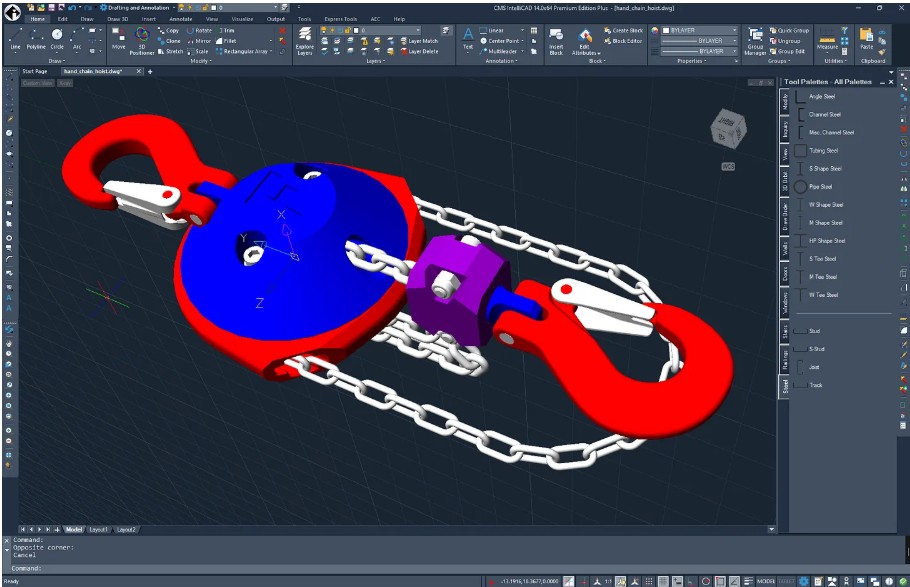
IntelliCAD’s original goal was to challenge AutoCAD directly, but after a disappointing commercial launch in the late 1990s, it evolved into something arguably more influential: a platform that powers a wide range of DWG-compatible CAD applications. Today, dozens of AutoCAD alternatives, including branded IntelliCAD derivatives and independent products, serve users seeking lower-cost drafting and design software, tells this WorldCAD Access Blog article.
Unlike traditional software vendors, the IntelliCAD Technical Consortium (ITC) does not sell CAD software directly. Instead, it operates as a collaborative organization whose members fund development through annual fees and gain access to IntelliCAD’s source code. Members can contribute bug fixes, participate in special-interest groups, and use the platform to create their own CAD products, internal corporate tools, or specialized industry applications.
The consortium’s model appeals to companies that want to develop CAD solutions without bearing the cost and complexity of building an entire platform from scratch. Developers can customize IntelliCAD through APIs, scripting tools, user-interface modifications, and industry-specific extensions. The platform supports multiple development paths, including creating custom workflows, building specialized add-ons for sectors such as architecture, manufacturing, surveying, and GIS, or porting existing AutoCAD ObjectARX applications to IntelliCAD’s IcARX framework.
A major advantage of IntelliCAD remains its cost. While AutoCAD requires an annual subscription, IntelliCAD-based products are often available through perpetual licenses at a fraction of the price. This pricing model has encouraged adoption among organizations whose primary needs revolve around 2D drafting and document production rather than advanced modeling.
Despite nearly three decades of development, IntelliCAD still lacks complete command and API parity with AutoCAD. However, the platform continues to evolve based on member priorities. Upcoming enhancements include direct editing of MicroStation DGN files without translation, reflecting ITC’s focus on practical interoperability.
The article argues that IntelliCAD’s greatest success is not competing head-to-head with AutoCAD but serving as a dependable OEM platform. By avoiding competition with its own members and continuously refining its technology, ITC has established a sustainable ecosystem that enables vendors to deliver affordable, customized CAD solutions to a broad range of industries.
