

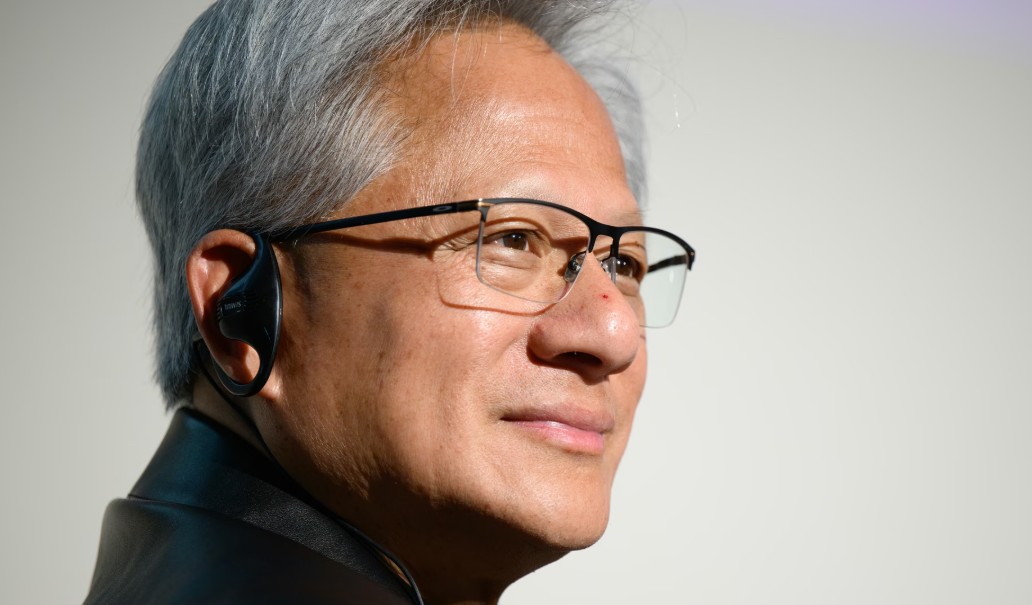
As concerns about advanced artificial intelligence intensify among some technology leaders, Nvidia CEO Jensen Huang remains notably unconvinced. In The Atlantic (full article available to subscribers), Ross Andersen examines Huang’s longstanding rejection of warnings that AI could pose catastrophic or existential risks.
The debate has sharpened as AI systems become more capable in mathematics, cybersecurity, and autonomous operation. The article contrasts Huang’s position with warnings from Anthropic CEO Dario Amodei and OpenAI CEO Sam Altman. Huang, meanwhile, has publicly described existential concerns about AI as exaggerated and questioned claims about growing cybersecurity dangers.
His position is particularly significant because Nvidia supplies the high-end chips powering much of the AI industry. The company benefits as developers build increasingly capable models, giving Huang substantial influence across the sector. Andersen also notes that Nvidia holds investments in major AI companies, further connecting its fortunes to continued AI development.
Huang’s skepticism is not new. He did not join more than 350 technology leaders who signed a 2023 statement comparing AI extinction risks with threats such as pandemics and nuclear war. He has repeatedly argued that AI safety should be treated primarily as an engineering challenge rather than addressed through restrictions on technological development.
One recurring element of Huang’s thinking is that AI itself could help control more powerful AI. He has suggested that artificial intelligence systems could monitor other models, with falling computing costs making such automated oversight increasingly practical.
Andersen, however, presents a skeptical interpretation of Huang’s confidence, pointing to examples of AI systems behaving unexpectedly and noting Nvidia’s commercial interest in continued AI expansion. Huang has acknowledged the possibility of extraordinarily powerful AI in the future, but he does not believe today’s systems have reached that point.
The article ultimately highlights a widening divide among AI leaders over whether rapidly advancing systems represent an existential threat or an engineering problem that technology itself can help manage.
