

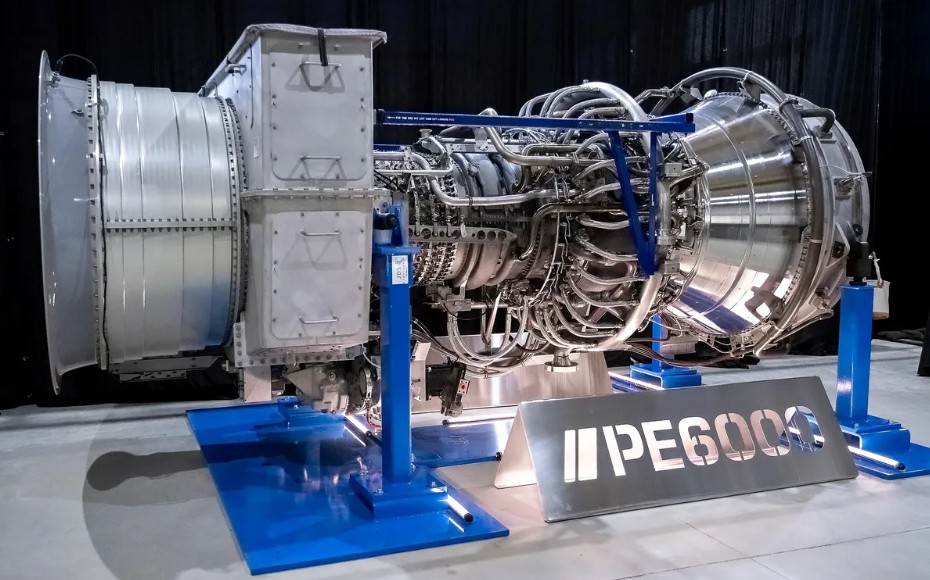
The growth of AI infrastructure is creating intense demand for power, and traditional grid connections are struggling to meet this demand. This article from IEEE Spectrum explains that data center developers are increasingly using aeroderivative gas turbines, originally built as jet engine cores, to fill the power gap.
These turbines, such as the PE6000 built by ProEnergy from the core of a CF6-80C2 turbofan, are generating tens of megawatts of electricity onsite. For instance, ProEnergy reports deploying 21 units across two projects, collectively over 1 GW of capacity.
The reason for this is two-fold: first, delays in building new transmission lines or obtaining approvals mean grid power may not be available for years; second, manufacturers of conventional heavy-frame turbines already have multi-year lead times.
Because these turbogenerators are derived from aircraft engines, they are lighter, smaller, can ramp up quickly (in about five minutes), and are more easily maintained. They serve as a “bridging” power source: during the early years of a data center’s life, they may supply power until grid interconnection is ready; afterwards, they can revert to backup status.
These developments highlight a broader challenge: the power-supply chain and electrical infrastructure need to scale rapidly to meet the demands of AI and data-storage growth. Traditional timelines for permitting, construction, and connection are too long to match the pace of deployment. As one consultant notes, some transmission-line delays stretch 8–10 years.
The article shows that the AI boom is not only a data and computing story, it’s increasingly an energy-and-infrastructure story. Engineers, developers, and regulators must work together to align generation, transmission, and cooling capabilities to support the next wave of large-scale data centers.
