

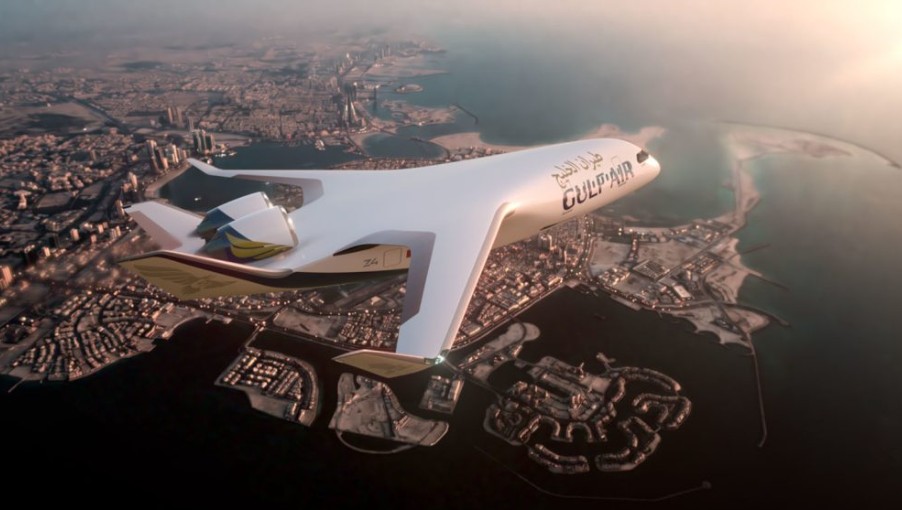
Aerospace startup JetZero is using advanced modeling, simulation, automation, and AI to develop its Z4 blended-wing body aircraft. Unlike conventional tube-and-wing airliners, the Z4 merges the fuselage and wings into a continuous lifting surface, promising lower drag, greater fuel efficiency, and more interior space, tells Develop 3D.
JetZero says the lightweight design can reduce drag by about 30%, contributing to fuel savings of up to 50%. Despite its 58-meter wingspan, the Z4 is designed to operate with existing airport gates, runways, and other infrastructure. It also uses certified Pratt & Whitney turbofan engines rather than depending on future hydrogen or battery propulsion.
Designing a blended-wing aircraft presents significant engineering challenges because aerodynamic, structural, manufacturing, and weight considerations are tightly interconnected. JetZero addresses these challenges through three development pathways: Pathfinder scale models, a full-size Demonstrator, and the highly optimized Product aircraft.
The company uses nTop to create a fully parametric model connecting the aircraft’s outer shape, structural wing box, airfoils, nacelles, winglets, landing gear, and interior volumes. When engineers modify a parameter, the geometry automatically regenerates and remains ready for simulation. This allows teams to explore thousands of configurations rather than manually perfecting individual designs.
Automation extends the process further. The nTop geometry engine runs as a native skill within Nvidia’s NemoClaw, enabling autonomous AI agents to populate parameters, generate geometry, dispatch computational jobs, and route results to analysis tools. Engineers can launch experiments covering dozens of aircraft configurations and allow simulations to run unattended overnight.
JetZero intends to give each aircraft a digital twin while applying detailed modeling selectively where it provides the most useful insights. Its full-scale Demonstrator is scheduled for its maiden flight over California’s Mojave Desert in late 2027, potentially becoming the first crewed blended-wing body aircraft to fly in more than a century.
