

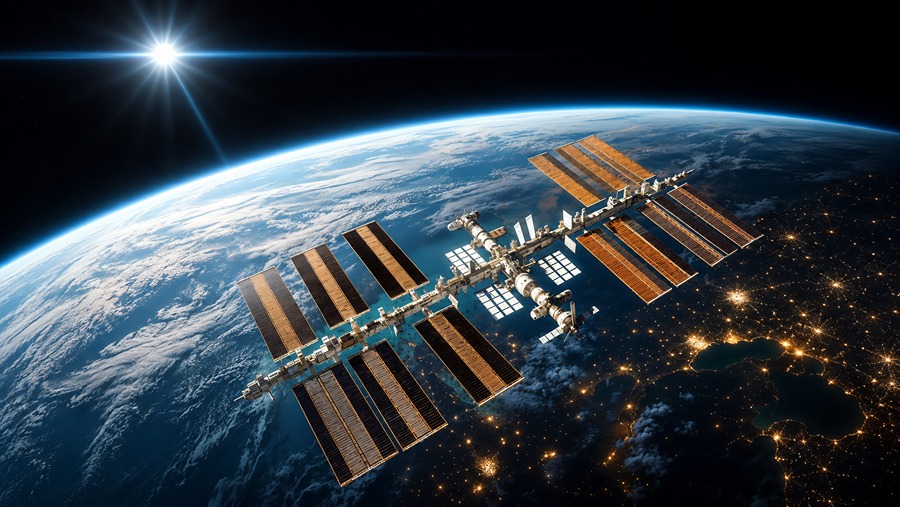
HOUSTON, TX, July 21, 2026 – Icarus Robotics (Icarus) has selected KULR Technology Group (KULR) to supply batteries for JOY, its free-flying robotic platform bound for the International Space Station. KULR will provide its KULR ONE Space (K1S) battery systems, built to NASA safety standards and used on the Artemis II crewed lunar mission, to power JOY’s navigation, maneuvering, and operations aboard the orbiting station.
“Icarus Robotics represents exactly the type of next-generation space company KULR ONE Space was built to support,” said Michael Mo, chief executive officer of KULR Technology Group. “Autonomous robotics in orbit demand safe, reliable, flight-ready energy systems that perform in mission-critical environments where there is no margin for error. We are proud to power Icarus as it advances a new category of robotic capability for the ISS and future commercial space stations.”
JOY is targeted to fly in early 2027 as part of the JOYRIDE-1. KULR’s Webster, Texas, manufacturing and R&D facility will handle production and testing of the Icarus battery systems.
The K1S battery system is built on KULR’s REACH battery architecture, which delivers high energy density at low mass. The K1S systems use cells qualified through Initial Lot Assessment (ILA), Lot Acceptance Testing (LAT), and NASA WI-37A cell screening protocols.
“Our goal is to make autonomous robots a standard part of how space stations operate, handling the routine work so crews can focus on the science,” said Ethan Barajas, CEO of Icarus Robotics. “JOY is the first step, and it only works if every system underneath it is dependable enough to run unattended in orbit. That’s why we turned to KULR for the energy that keeps it flying.”
KULR CEO Michael Mo added: “The next phase of space infrastructure won’t be defined by compute alone. Orbital systems can’t be serviced by technicians, so the robots that inspect, repair, and assemble them – and the batteries that power them – are essential to keeping that infrastructure running safely. This agreement reflects where KULR ONE is headed: the energy and power platform for physical AI, where autonomous systems in orbit must carry both their own intelligence and their own energy.”
The agreement extends KULR’s work in the commercial space sector. The company has supplied battery systems for NASA’s Artemis crewed spaceflight program and maintains an active rideshare mission with Exolaunch aboard a SpaceX launch vehicle. KULR also holds supply relationships with multiple commercial space operators.
Source: KULR Technology
About KULR Technology Group

KULR Technology Group designs, tests and manufactures battery systems for aerospace, defense, aviation, data center and industrial applications. Founded in 2013, the company is based in Webster, TX. Its KULR ONE product line includes battery packs for space, aviation, defense, subsea and grid uses. KULR also provides battery management electronics, thermal protection materials and battery transport cases. Its engineering services cover cell screening, pack testing, prototyping, certification support and production. KULR VIBE software detects and reduces vibration in rotating equipment and vehicle systems. The company serves customers in aerospace, defense, robotics, telecommunications, automotive, renewable energy and industrial markets. It also supports spacecraft, drones, marine systems and power infrastructure projects. KULR licenses technology and operates digital asset mining activities.
About Icarus Robotics

Icarus Robotics develops mobile robots for logistics, maintenance and construction tasks in space. Founded in 2024, the company is based at the Brooklyn Navy Yard in New York City. Its Joyride robot operates inside crewed stations and moves in microgravity. The system uses two robotic arms to handle cargo, tools and station equipment. Operators can control the robot remotely and record demonstrations for later automated tasks. The company also develops software that trains robots with data collected during missions. Planned uses include cargo handling, experiment setup, inspection, repair and infrastructure maintenance. Icarus serves space station operators, mission providers, satellite companies and orbital infrastructure developers. It also works with government and commercial programs in low Earth orbit. The company plans to demonstrate Joyride aboard the International Space Station in early 2027. Voyager Technologies will handle integration, certification, launch coordination and mission support.