

Researchers have developed a new approach to 3D printing active optical components that can change the way they interact with light after fabrication. The work overcomes a major limitation of conventional 3D-printed optics, which are typically passive and fixed in their optical properties. By incorporating photoresponsive molecules into printable materials, the team created optical devices whose behavior can be altered simply by illuminating them with light, tells this article from the 3D Printing Industry blog.
The research uses an azobenzene-based photoresponsive resin that can be processed through vat photopolymerization. This material exhibits photoinduced birefringence, allowing it to modify the polarization and intensity of transmitted light in response to external illumination. As a result, the printed components function as dynamic optical elements instead of static structures.
A key challenge was ensuring that the printing process preserved the material’s photoresponsive behavior. The researchers identified separate operating thresholds for resin curing, optical activation, and material degradation. This distinction enabled them to optimize the manufacturing process so the printed parts retained their light-controlled functionality while maintaining high fabrication quality.
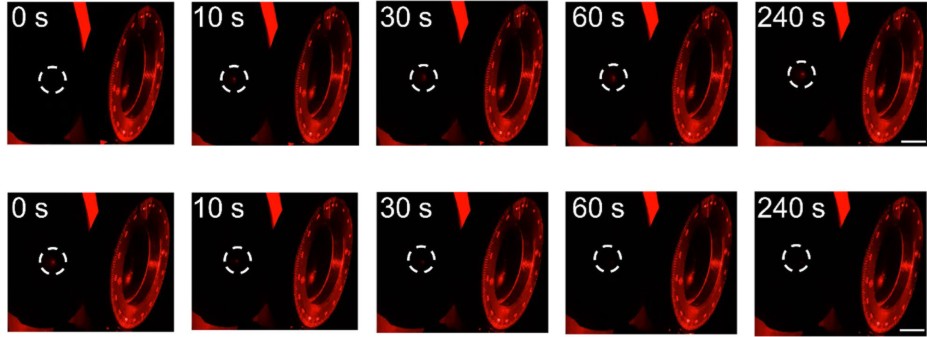
To demonstrate the technology, the team fabricated several three-dimensional optical components and evaluated their performance. The printed devices successfully modulated laser beam intensity and polarization while maintaining stable operation over more than 60,000 switching cycles. The researchers also determined an optimal ultraviolet exposure range that preserved the nonlinear optical characteristics required for reliable performance.
The study represents an important advance because photoresponsive optical materials have traditionally been limited to thin films and flat surfaces. Extending these capabilities to complex three-dimensional geometries allows engineers to design adaptive optical systems with greater freedom. Potential applications include reconfigurable photonic circuits, optical communications, beam steering, sensing, and all optical switching technologies.
By combining advanced photoresponsive materials with high-resolution additive manufacturing, the research demonstrates that 3D printing can produce intelligent optical components whose properties can be tuned after fabrication. The achievement marks a significant step toward next-generation photonic devices that are lighter, more versatile, and capable of dynamically responding to changing operating conditions.
