

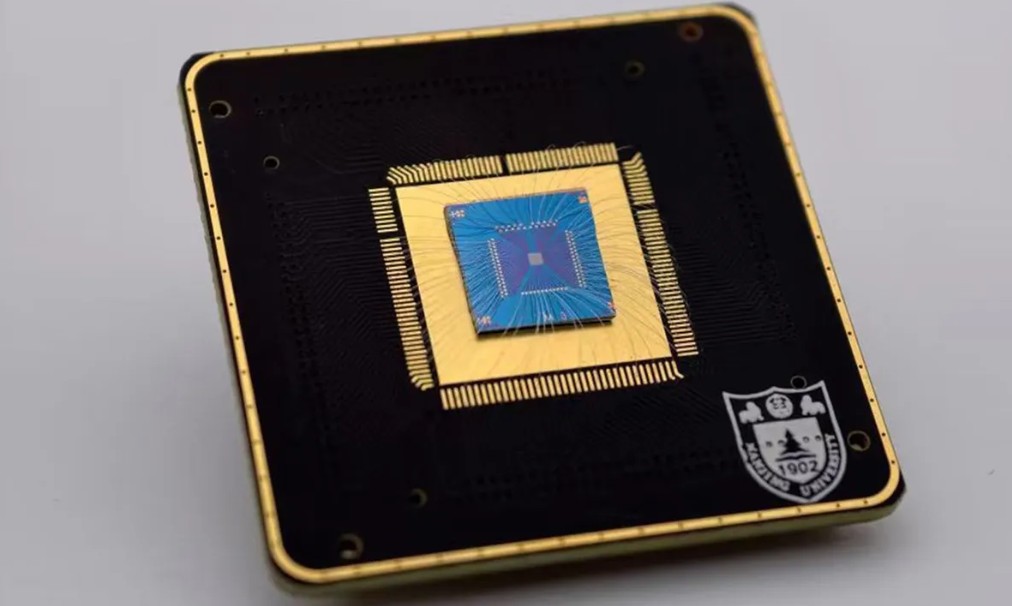
Researchers at Nanjing University in China have developed LightTok, a two-dimensional sensor chip that converts incoming light directly into tokens for artificial intelligence models. The technology could significantly reduce the energy required for visual processing in drones, robots, and other autonomous machines, tells Live Science.
Conventional vision systems rely on multiple processing stages. Sensors capture light, convert analog signals into digital pixels, temporarily store information, and transfer data to separate processors. Images are subsequently divided into patches and converted into tokens that AI models can interpret. These operations consume considerable energy, particularly in battery-powered devices.
LightTok combines five processing stages into one by integrating sensing, memory, and computation within individual pixels. Its architecture uses single-layer molybdenum disulfide floating-gate phototransistors, which detect light, retain electrical charges, and perform calculations.
This approach eliminates unnecessary data movement between components, addressing a major source of energy consumption in conventional visual processing systems.
During testing, LightTok achieved 87.3% accuracy in image recognition while demonstrating approximately 10 times greater energy efficiency during token generation than conventional methods.
The prototype currently supports a resolution of only 32 × 32 pixels, substantially below the capabilities of commercial cameras. However, researchers believe the technology could eventually scale through complementary metal-oxide-semiconductor manufacturing processes.
Potential applications include autonomous drones conducting disaster assessments, remote sensing equipment, and intelligent machines operating under strict power constraints. Reducing visual processing demands could extend operating times and decrease dependence on external computing resources.
Industry experts acknowledge the technology’s potential while emphasizing that it remains an early-stage demonstration. Scaling the sensor and validating performance in practical environments will be essential before commercial deployment.
For electronics engineers and robotics developers, LightTok represents an emerging approach to physical AI, shifting computation closer to sensors and reducing the energy required to transform environmental information into actionable intelligence.
