


BOSTON, MA, Nov 3, 2026 – LinearB has launched Agentic Studio, which provides engineering teams and AI coding agents with development data and operational context from across the software delivery lifecycle. The system supports engineering decisions, workflow analysis and automated coding tasks. Agentic Studio is available to all LinearB customers, while its agent skills are in early access.
The platform consolidates data from Git repositories and project management systems, matches developer identities across tools and tracks code changes from tickets through releases. It also incorporates AI attribution and industry benchmarks to help engineering leaders assess development performance.
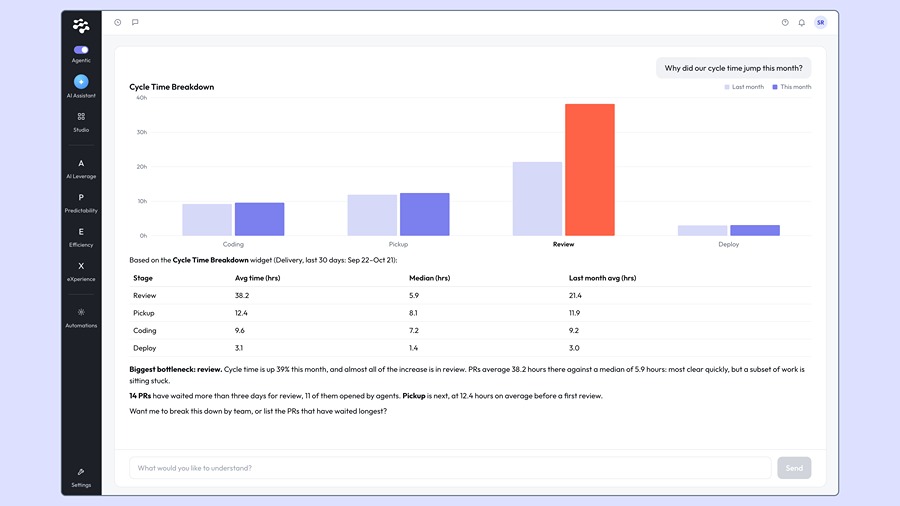
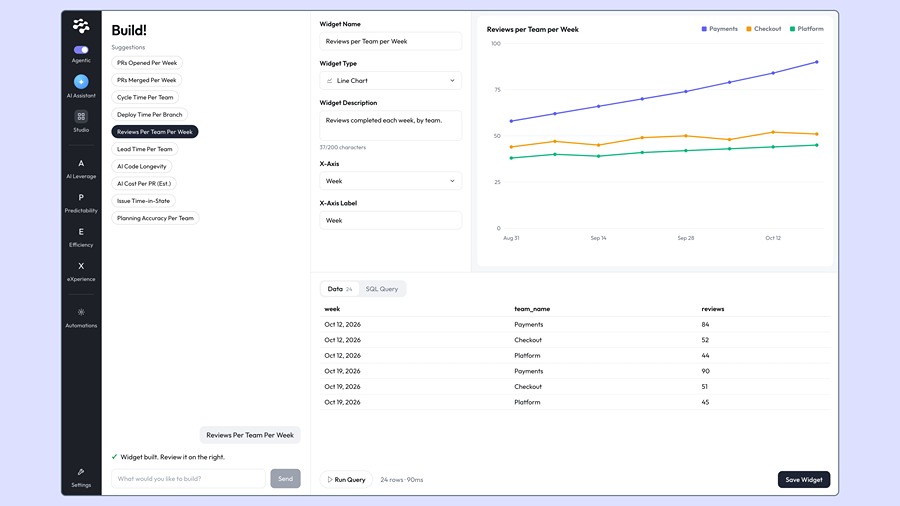
Through a conversational AI assistant, engineering leaders can ask questions about delivery delays, team performance and AI adoption. The system provides answers and recommended next steps, while users can create metrics, reports and dashboards. Model Context Protocol (MCP) connectivity allows external AI tools, including Claude, to access the same engineering context.
Agent Skills and Development Workflows
LinearB’s first agent skill, called effort, is available in early access. It adjusts the effort assigned to coding agents according to a task’s business relevance, complexity and risk.
The skill evaluates factors including code quality and rework rates, recent service incidents and code ownership history. It assigns less effort and fewer tokens to low-risk changes, while directing more effort toward high-priority tasks that require more careful edits and testing.
LinearB said the skill works with any coding agent. Engineering leaders can monitor how frequently tasks receive low, medium or high effort assignments. The company plans additional skills focused on downstream development activities, including code review and merging.

“Context is the new king,” said Ori Keren, CEO and co-founder of LinearB. “We realized we hold a knowledge graph that nobody else has of everything happening across the software delivery lifecycle, and that’s exactly what agents and teams need to deliver high quality software, faster. So we rebuilt LinearB around it.”
Kraken used LinearB’s MCP server with AI to investigate delays in its code review process. The analysis identified time zone differences and reviewer availability as the main causes. Kraken reduced review time at the 90th percentile by more than half over four months.
“That’s the structural shift,” said Nik Sudan, engineering operations lead at Kraken. “It moves leaders from anecdote-driven to evidence-driven.”
Software Engineering Benchmarks
LinearB’s 2026 AI benchmarks analyzed 2.7 million pull requests from 83,000 developers across 253 engineering organizations between February and May 2026.
The findings showed that the developer using AI on at least 75% of coding days merged 96% more pull requests per week than a year earlier. The developer who did not use AI merged 3.6% fewer pull requests over the same period.
The company’s 2026 Software Engineering Benchmarks Report also found that AI-assisted pull requests were 2.6 times larger than unassisted requests at the 75th percentile. Pull requests created by agents waited more than five times longer for review.
Other findings from the AI benchmarks included:
- AI adoption: Among organizations classified as elite, AI assisted 54% of pull requests.
- Autonomous agents: At the 90th percentile, autonomous agents opened 4.7% of pull requests. At elite organizations, 79% of agent-generated requests merged within 30 days, compared with 92% of human-only requests. The agent merge rate fell to 37% at organizations classified as fair.
- AI code review: Pull requests receiving AI reviews had the highest merge rate among the types examined, with improvements of up to five percentage points.
- AI expenditure: Token spending at the 90th percentile reached $35.20 per developer per coding day, an increase of nearly 75% over three months. Median spending changed little.
The 2026 Software Engineering Benchmarks Report analyzed more than 8.1 million pull requests from 4,800 engineering teams across 42 countries.
Engineering Management and Product Development
LinearB AI assistant and MCP access features have recorded higher user retention than any of its previous releases. In 2026, Gartner named the company a leader in its inaugural Magic Quadrant for Developer Productivity Insight Platforms, evaluating its ability to execute and completeness of vision.
“These are exciting times to rethink our role in the software ecosystem,” said Ori Keren. “Everyone else is focused on writing code. We realized we hold a knowledge graph of everything happening across the software delivery lifecycle, and that’s exactly what developers and agents need. So we rebuilt LinearB around it. We don’t build the software factory. We instrument it, so leaders know what to do next and agents make smarter decisions on every change.”

“For years, engineering leaders told us the same thing. Metrics are useful, but they don’t tell you what to do,” added Dan Lines, co-founder and COO of LinearB. “A dashboard says your cycle time is two days. So what? Now a leader can ask what to improve in their engineering organization and get a clear answer. And when that same context goes to coding agents, the platform isn’t just reporting anymore. It’s acting.”
At Emburse, the company’s chief technology officer uses LinearB data to report on AI investments to its board.
“I use LinearB data and charts directly in my board decks, because my board is specifically asking questions about our use of AI and what our ROI is,” said Ken Ringdahl, CTO of Emburse.
LinearB plans to expand its agent skills library with capabilities focused on reviewing, merging and governing AI-generated code, alongside efforts to reduce AI-related engineering costs.
Source: LinearB
About LinearB

LinearB is a U.S. software company that develops tools for managing software engineering operations. Founded in 2018 by Ori Keren and Dan Lines, it is headquartered in Los Angeles, CA. The company serves software developers, engineering managers, technology departments and enterprise development teams. Its platform tracks development activity, project progress, code changes, review times and software delivery performance. It also provides workflow automation, AI-assisted code reviews and engineering performance reports. The software integrates with code repositories, project management platforms and other development applications. Engineering managers use these tools to monitor productivity, identify delays and assess resource allocation. LinearB also analyzes how AI coding tools affect development processes and code quality. The company reports that its platform serves more than 1 million software engineers worldwide.
