

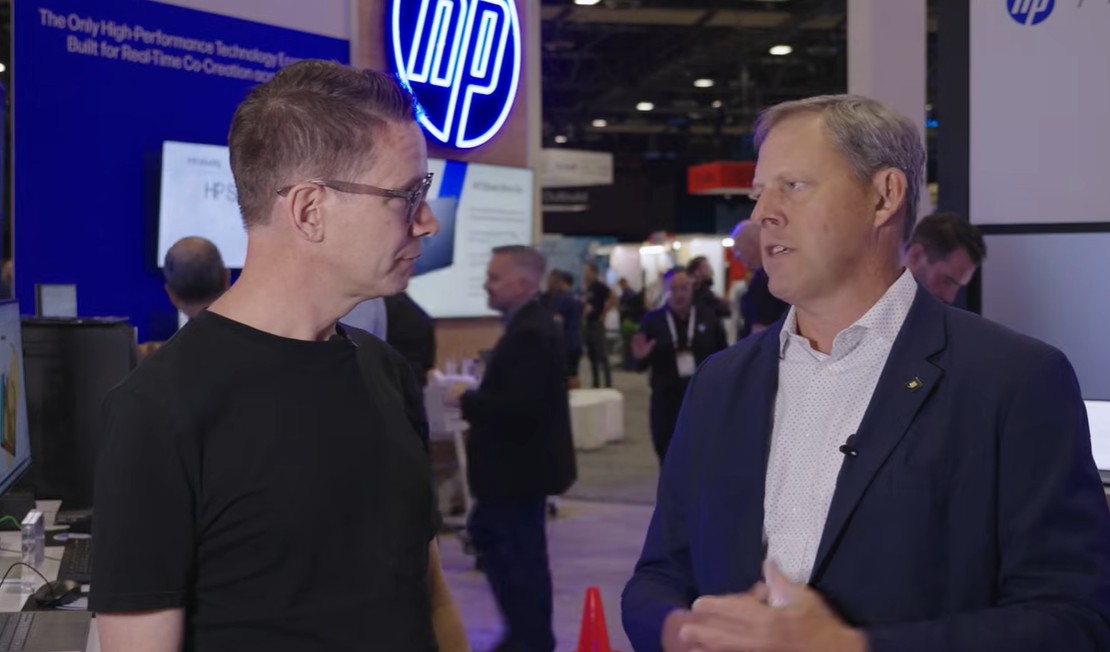
Running a large language model on a laptop could change how architecture and engineering firms plan their workstations. AEC Magazine’s Greg Corke explores that possibility with AMD’s David McAfee, focusing on hardware that must support AI alongside Revit, visualization software, and other design applications.
The discussion centers on HP’s ZBook Ultra G3a and its AMD Ryzen AI Max Pro processor. According to the article, the workstation supports up to 192 GB of unified memory, with as much as 160 GB available to the GPU. That capacity could bring models traditionally associated with data centers onto a portable computer, reducing dependence on cloud processing.
Memory capacity, however, is only part of the equation. A running model must share computing resources with design software. The interview examines what happens when AI, Revit, and visualization tasks compete on the same machine, making simultaneous performance an important consideration for workstation planning.
Usability also matters. HP and AMD are working toward more accessible controls for allocating memory, avoiding the need for users to change settings in the BIOS. Easier adjustment could help designers configure resources around different workloads.
Purchasing decisions become harder when requirements are changing. LPDDR memory offers power efficiency, but it cannot be upgraded later. Firms therefore face a tradeoff between present needs and the capacity future AI applications might require.
The conversation also covers Radeon professional graphics drivers and the software ecosystem. One question is whether AI-assisted coding could simplify moving applications from Nvidia’s CUDA platform to AMD’s ROCm environment. The article presents this as a topic for discussion, rather than an established solution.
AMD’s broader vision spans mobile workstations, the Threadripper Halo Station, and cloud resources. For AEC firms, the emerging question is where each workload belongs and how hardware choices can accommodate both design tasks and increasingly demanding AI tools.
