

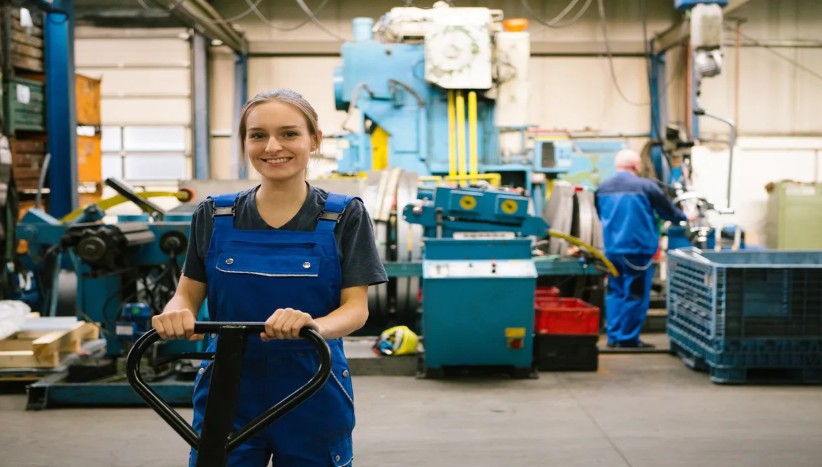
Manufacturers face growing difficulties attracting younger workers, and competitive wages alone may no longer be sufficient. A Design News article examines why outdated perceptions of factory work continue to discourage Generation Z, despite advances in robotics, automation, and artificial intelligence.
Richard Blatcher, senior director and general manager of industry solutions at Wrike, argues that manufacturing has struggled to communicate its technological sophistication and career opportunities. Many students still associate factories with dangerous, dirty environments rather than modern facilities where engineering, design, and advanced manufacturing intersect.
Blatcher believes firsthand exposure can change these perceptions. Factory visits allow students to observe sophisticated production systems and understand opportunities across automotive, aerospace, industrial machinery, and other engineering sectors.
However, attracting talent also requires reconsidering the role of AI in recruitment and production. Fully automated hiring systems can overlook qualified candidates when their applications lack specific keywords. Similarly, replacing experienced workers with robots risks losing valuable manufacturing knowledge.
Instead, Blatcher advocates human–AI collaboration. Experienced employees can supervise multiple robots while identifying opportunities to improve production processes, efficiency, and quality.
AI-powered vision systems illustrate this relationship. Although these technologies can rapidly collect inspection data, human expertise remains essential for interpreting results, evaluating trade-offs, and implementing improvements. Excessive data without meaningful analysis can complicate operations rather than improve them.
The same principle applies to engineering design. AI can evaluate thousands of alternatives, but engineers must determine which configurations satisfy practical requirements and customer expectations.
Blatcher emphasizes involving stakeholders throughout the manufacturing process, from design and engineering to testing and production. Their combined knowledge helps organizations translate automated insights into measurable improvements.
For manufacturers, addressing workforce shortages requires more than higher salaries or additional automation. Demonstrating modern manufacturing capabilities, preserving experienced workers’ knowledge, and offering younger employees opportunities for technical creativity and problem-solving could help make industrial careers more attractive.
