

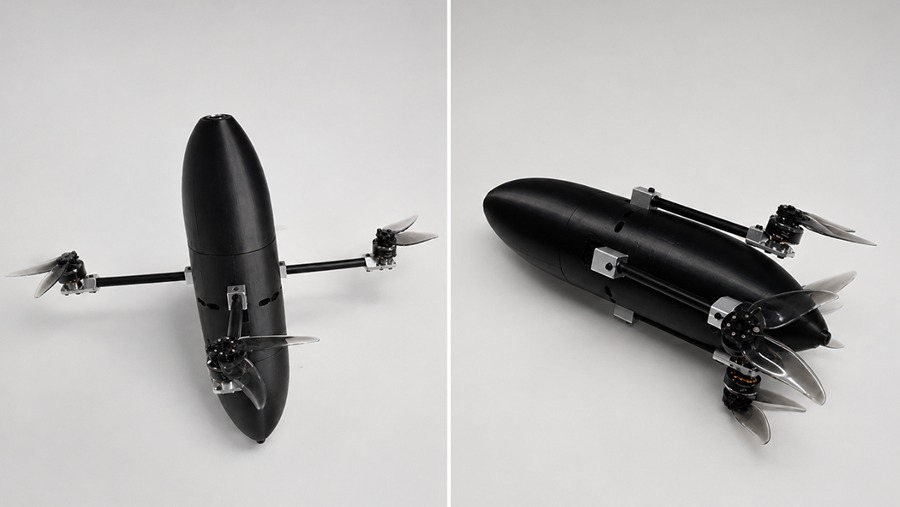
SAN FRANCISCO, CA, Aug 26, 2026 – Mara has raised $7 million to move its Spike counter-drone system from field testing toward combat deployment. The portable system combines 360-degree sensing with 250-gram kinetic interceptors to counter swarms of small first-person-view drones, including models designed to bypass radio-frequency jamming.
Khosla Ventures led the pre-seed round. Participants included a16z Speedrun, Night Capital, Palmdrive, Protagonist, Freedom Fund, Indicator Fund and angel investors.
Limits of Existing Counter-Drone Systems
First-person-view (FPV) drones can approach from several directions and attack in groups. Some use fiber-optic control links or onboard guidance instead of radio links, limiting the effectiveness of electronic jamming.
Many counter-drone systems rely on one gun, laser or partly operator-controlled interceptor within a single field of coverage. That configuration can struggle when several small drones’ approach from different directions in quick succession.
How Spike Works
Spike pairs targeting sensors with a magazine of small kinetic interceptors to provide hemispherical coverage around its position. Mara describes the sensor and interceptor nodes as attritable, meaning they are designed for replacement if lost. The system can engage dozens of threats at a total cost below the value of the protected equipment or infrastructure.
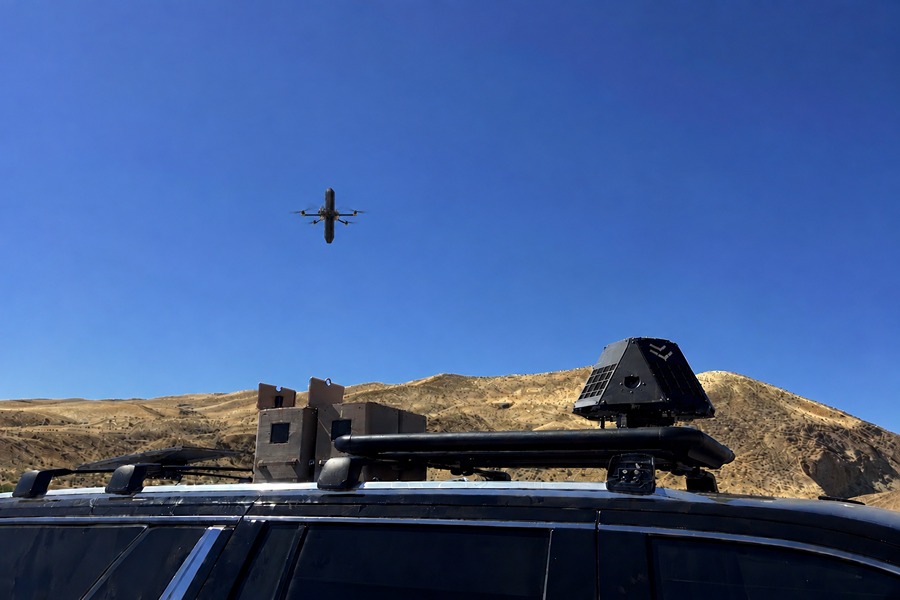
Spike consists of two modular components that can operate separately or together. The Spotter targeting unit combines visual, acoustic and optional radar sensors with Mara-developed AI for detection during daytime, nighttime and varied weather conditions.
The tube-launched Seeker interceptor weighs 250 grams and reaches 200 km/h. After receiving target data and a launch command from Spotter, Seeker uses onboard processing to pursue the target. The sequence does not require direct operator input, but an operator sets rules of engagement and can abort a launch.
Mara is developing several Spike configurations. A rucksack-portable system is intended for dismounted squads, while vehicle-mounted units are designed for convoy protection. Larger installations can form multi-kilometer perimeters around military bases, front lines, sporting events and power plants. Mara is also running a civilian pilot at a South Korean port.
Field Testing and Defense Programs
Mara has tested Spike components during live field exercises. Seeker completed intercepts after receiving cues through U.S. Army software during an exercise in Texas. Spotter operated without manual control on an armored vehicle during an Army exercise in Europe and sent detection data to Army command software.
At a separate field test with a U.S. special operations unit, Spotter detected a target and cued Seeker to launch without operator input. Ukrainian forces tested Spotter 40 kilometers from the front line in July, where the system tracked multiple FPV drones.
Mara holds research and testing agreements with three U.S. defense organizations. The company was selected for NATO’s DIANA innovation accelerator and is engaging with military organizations in the United Kingdom, Czech Republic and Ukraine.
“Small drones changed the battlefield because they distributed the cost and capability of precise attack,” said Daniel Kofman, co-founder and CEO of Mara. “Most defenses still concentrate both replacement cost and line of fire. Spike instead creates a distributed mesh of small, cheap nodes that can each aim and shoot in multiple directions at once.”

“Mara has moved rapidly from proof-of-concept to user testing for an autonomous system,” said Nicole Fraenkel, partner at Khosla Ventures. “What caught my eye is that they’re building counter-drone autonomy with a system cost that’s orders of magnitude lower than anything else we’ve seen.”
Deployment Timeline
Mara plans to deploy ground-mounted Spike systems to customers by the end of 2026. Vehicle-mounted and man-portable versions are scheduled to launch in 2027.
Source: Mara
About Mara

Mara develops autonomous counter-drone systems for military and security applications. Founded in 2024, the company is headquartered in San Francisco, CA. Its Spike system detects, tracks and intercepts first-person view drones. Spike combines the Spotter sensing system with Seeker kinetic interceptors. Spotter uses passive sensor fusion and optional W-band radar to track aerial targets. Seekers receive tracking data before using onboard sensors to engage threats. Spike provides hemispherical coverage and carries up to 48 interceptors. Each interceptor weighs 250 grams, including its payload. Operators can deploy the system from fixed positions, vehicles, vessels or portable configurations. Mara designed Spike for radio-frequency-contested and GPS-denied environments. The company targets armed forces, government agencies, defense partners and infrastructure operators. Mara has conducted field trials with military and research organizations. It plans ground-mounted, vehicle-mounted and portable versions.
