

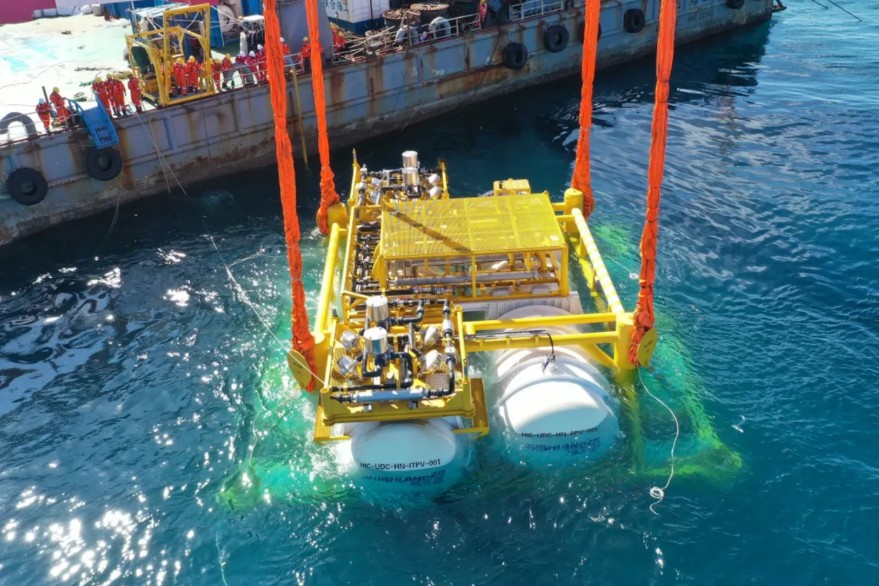
Lin-gang Special Area in Shanghai has just completed phase one of the world’s first wind-powered underwater data center (UDC), costing around U.S. $226 million or ¥1.6 billion, tells Wired.com. The facility is rated for 24 megawatts (MW) of capacity, although this initial phase is smaller.
What sets it apart: more than 95% of its electricity is drawn from offshore wind turbines in the East China Sea. Meanwhile, the servers are submerged underwater so that cooling is achieved via seawater rather than conventional air-conditioning systems. That cuts the energy devoted to cooling to under 10% of total power use.
In energy-efficiency terms, the target Power Usage Effectiveness (PUE) is 1.15, well ahead of China’s national requirement of under 1.25 by the end of 2025. The project claims to reduce overall energy consumption by about 22.8% and slash land use by over 90%.
Beyond the technical specs, the UDC is part of Shanghai’s bigger plan to scale intelligent-computing infrastructure and anchor the city as a technological innovation hub.
Nevertheless, the article underscores the challenges ahead. Moving from demonstration scale to full commercial deployment will require tackling issues such as long-term maintenance, corrosion in marine environments, cost optimization, and ensuring reliable operations.
For engineers, infrastructure planners, and data-center specialists, the project offers a case study in marine-based cooling, renewable-powered architectures, and the reuse of coastal/offshore assets for digital-economy needs.
