

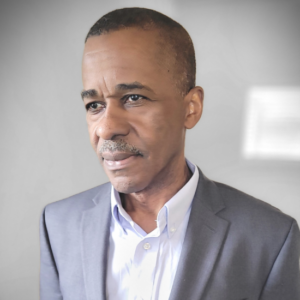
 Watching butterflies and birds is an idle pastime for most of us. For a young Patrick Hanley growing up in St. Kitts and Nevis, a Caribbean nation composed of two islands so small I could not find them on my globe, it was the start of a career in aerodynamics. Patrick loved to watch objects fly, whether they be living or man-made. He would study how each object flew. Growing up in the tropics and under an airport approach, he had plenty of opportunity to observe.
It led to experimental aircraft designs, many of which were not in the air for long.
“One of the best ways to learn about something is to have it not work,” he says. “If it works, what are you going to learn?”
Patrick went on to earn a PhD from MIT in fluid dynamics. Yet, Patrick is kind and humble. To my modest understanding of structural simulation, he defers,
“You could give me ten questions about structures, and I will get 8 wrong,” he says.
From a Small Island to MIT
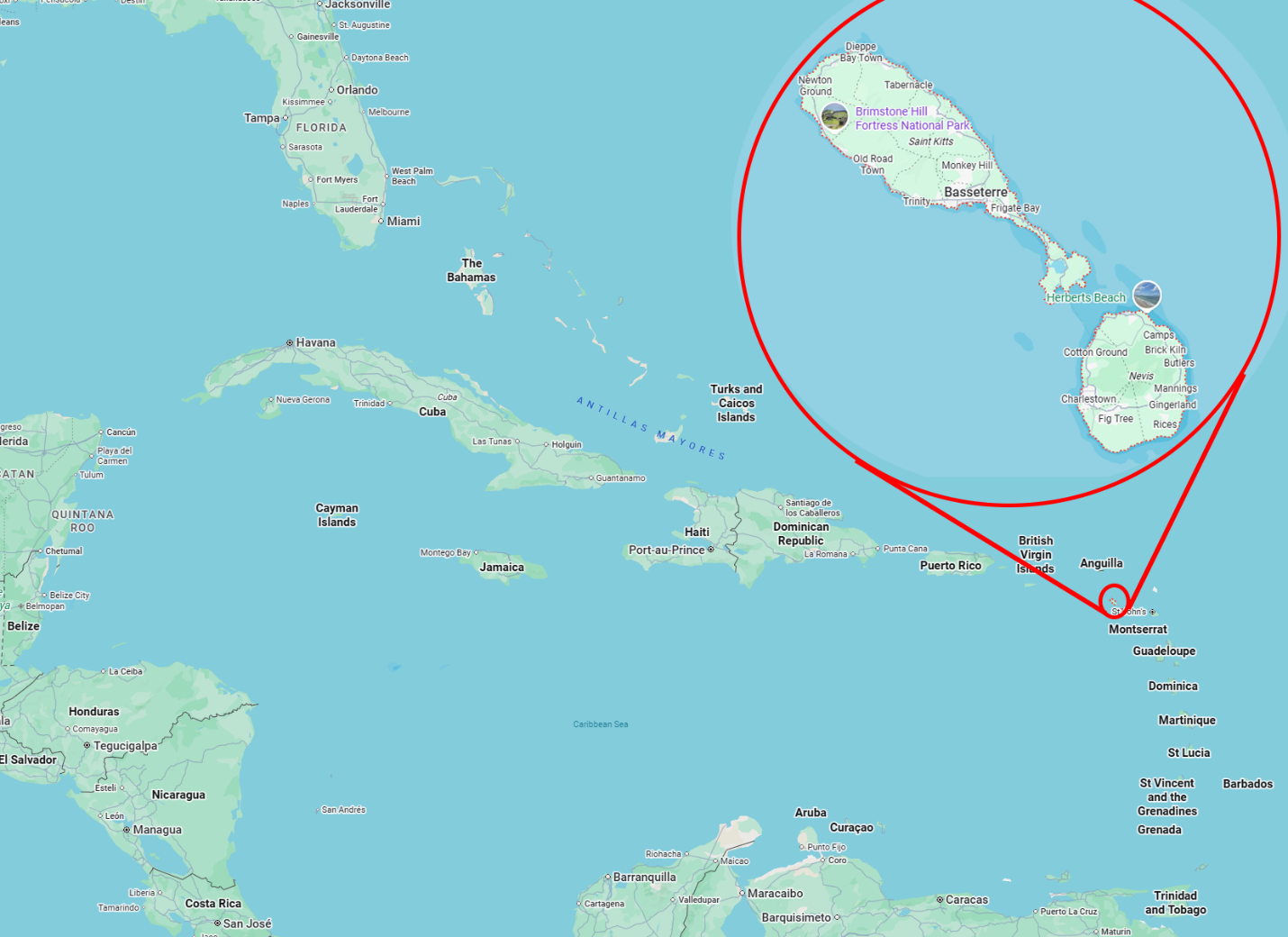
Patrick lived with his family in Basseterre, the capital and largest city of Saint Kitts and Nevis with an estimated population of 14,000 in 2018. St. Kitts was part of the British Commonwealth. His school would send the O-level exams[i] to Cambridge for grading. The results were printed afterward in the local newspaper — often to the embarrassment of students and their parents.
While waiting for the results, Patrick and his family moved to New York City. He was sixteen. In his first year of high school, the found the citywide physics exam easy, scoring a 98. The next-highest student got 78.
“Everybody else failed,” he recalls.
Math and physics came easily to the young Patrick. He enrolled in New York’s Polytechnic Institute in New York — now part of NYU — and graduated summa cum laude with a bachelor’s degree in aeronautical engineering. He worked his way into a professor’s lab by showing up week after week until the professor relented. That professor collaborated with MIT faculty on acoustics and recommended him for graduate studies at MIT.
Patrick was a research assistant at MIT “from day one.” That was in 1983. His stipend was $900 a month. “That was a lot of money back then.”
You know that picture of a hundred engineers over drafting tables, all in identical white shirts, all just about guaranteed to be anonymous forever and bored every day? One of them was Patrick. He interned at Fairchild the summer of 1982. Fairchild made the iconic Warthog, the affectionate name for the A-10 Thunderbolt II.
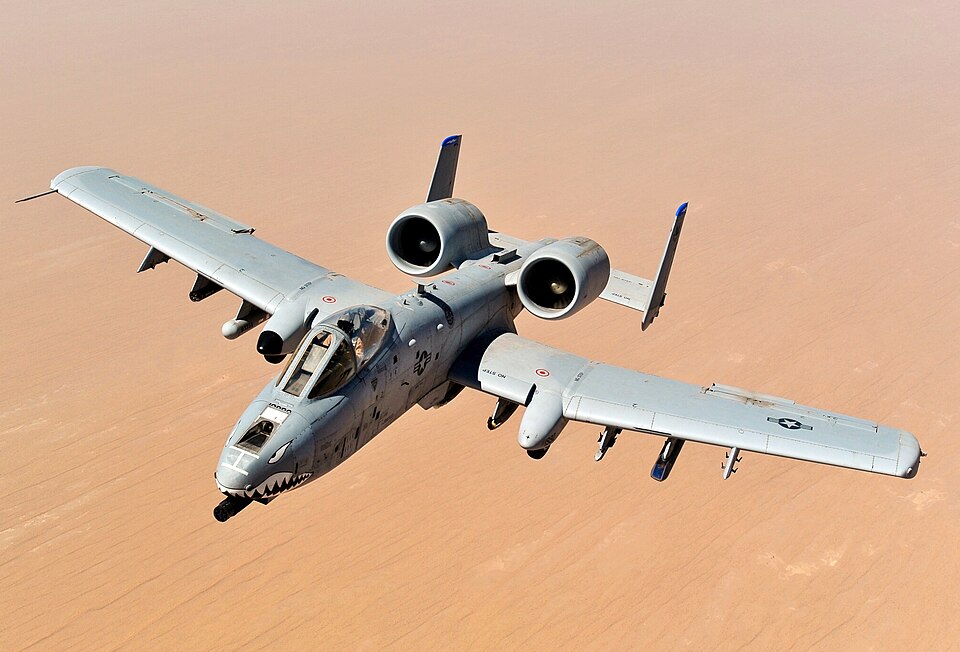
You can’t say enough about the A-10. Designed for use against tanks, firing depleted uranium rounds, the A-10 was the last thing enemy tank crews never saw. The aging, slow-moving, heavily armored aircraft is the US Air Force’s beloved tank-killer, a life-saver for the Army’s ground troops. The A-10 was recently brought into the Iran war for something else entirely: it has an amazing ability to loiter, to fly for hours over the Persian Gulf and Strait of Hormuz. Plus, it flies slow enough that pilots can distinguish boats that pose a threat from those that do not. The Navy has nothing like the A-10 on its carriers.
As exciting as all that sounds, Patrick’s job was mundane. He found himself feeding an IBM 360 punch cards for the aircraft’s air-conditioning system.
He did not see his future at Fairchild. Or any company with a room full of engineers.
Three Comebacks
Patrick graduated into academia with a a tenure-track position at the University of Connecticut, teaching courses in fluids, heat transfer and aerodynamics. In 1993–94, he left to start a software business of his own, which he recalls as “a terrible decision as far as our standard of living.” His first product, VisualFoil, borrowed its name from the “visual” spirit of Windows 3.1. He sought to undercut the expensive aerodynamic packages of the day on price.
Then Mark Drela, the MIT professor whose XFOIL is still the gold standard for airfoil analysis, released his code free under an open-source license (source: XFOIL documentation, MIT) — and Patrick’s software business collapsed.
Patrick decided to focus on what XFOIL and other software could not do. He came up with MultiSurface Aerodynamics, a panel and vortex-lattice code.
But then OpenVSP and a wave of free vortex-lattice tools. His software business collapsed again.
Patrick came back with Stallion 3D, his Navier-Stokes solver.
For someone influenced by birds and airplanes, why name your program after a horse?
 It turns out one of Patrick’s kids (Emma, one of six children) was into horseback riding. She was also a good artist. She drew her dad the logo of a horse.
“My kids are very good artists,” he says. “I can do stick drawings. They can do masterpieces.”
How do customers find him in Ocala, a remote town next to Florida’s Ocala National Forest used by the Air Force for bombing runs?
Patrick does a little advertising and uses LinkedIn to spread the word.
Customers find Stallion 3D cheap and accurate.
“A lot of the big companies, when they were just starting out, bought my code,” he says. “After they graduate from my code, that’s when they buy Ansys.”
Stallion 3D is kinda like a gateway drug, I suggest.
“Exactly,” he says. “But the code has to be extremely accurate.”
The Tiles Tell Tales
Accuracy is the main pitch Patrick makes for his software. Around 2017, he was trying to port Navier-Stokes equations into what had been Euler code, and his Cartesian grids — without cut cells — kept producing terrible results at the wall. The fix arrived at his kids’ school. “I’d go to pick them up in the afternoon, and all I was looking at on the ground was tiles,” he says. “And it came to me how to make a Cartesian grid without cut cells that works with high accuracy. I’m not going to tell you how, but it worked.”
He points to the ONERA M6 wing, the standard transonic validation case in CFD, run near Mach 0.84. Early NASA validations missed the double shock. Stallion 3D, on a two-million-cell mesh small enough to run on a PC, resolves it. Structured prism-and-hex grids, he notes, can be ten to thirty times more accurate than unstructured ones at the same cell count — and that margin is the product.
Why Not Design the Airfoil?
As no conversation these days is complete without mention of AI, I had to ask Patrick his thoughts on the subject. The nTop conference, still fresh in my mind, had demonstrated how people with no aerodynamics background, zero knowledge or Euler or Bernoulli, could generate damn-good airfoil shapes by the thousand.
“What good are thousands of airfoils?” Patrick asks. “An aircraft only needs only two or three.
“How about you just sit down for a day and figure out which two or three might be best, based on your experience,” he suggests.
His real objection to designing airfoils is liability.
He’s careful to supply a disclaimer for his software: don’t use it to design an airfoil. All it does is the math. The user supplies the shape and Hanley software analyzes it.
Patrick offers the Series 6 airfoil as an example of something gorgeous but deadly.
“Airplanes designed with six-series airfoils tend to hit the ground,” says Patrick. The mission, the control surfaces, what happens past the stall angle. Airfoil shapes, even when optimized for lift and drag, don’t tell the whole story.
“The whole story has to come from you,” he says.
AI is certainly not without its purposes, though. Patrick’s son, a computer scientist, has fully embraced AI; Patrick uses it himself “as a means to an end” — to speed up coding, geometry, and advertising.
What Does an Aerodynamicist Think is Fun?
Patrick has worked for the emerging new phase of air transport, that which may look like things for whom flight is uncertain at best. Think again of flying cars.
Analyzing for flying cars was the most fun Patrick has had. For example, his stint at Terrafugia.
“It was one of the funnest. The most fun I’ve ever had.”
Terrafugia, founded by Carl Dietrich, an MIT PhD whom Patrick rates among the smartest and kindest people he’s met. Dietrich hired him by inventing a role on the spot — “he created a job in the interview for me,” a technical fellow rather than the engineer slot Patrick had applied for. The eVTOL effort, TF-2, was eventually acquired by Geely, the Chinese automaker that owns Volvo. Geely bought Terrafugia in 2017 (Geely / Terrafugia, 2017).
Where is my Flying Car?
This brings us to the air taxis, arguably the most-funded flying car concept, therefore the most hyped.
What’s holding back air-taxis?, I ask, expecting safety and range issues.
Patrick says safety and range are the wrong worries. The mission isn’t cross-country; it’s the airport. Every airport sits an hour of traffic from downtown. It’s not the last-mile problem — it’s the last-fifty-miles problem. Fly in a straight line and you save an hour of an executive’s time. Add to that the cost of a helicopter helicopter ride and an air taxi is a no brainer.
Again, what’s stopping air taxis, I ask.
It’s the noise, says Patrick.
“You do not want to hear these things buzzing you every five seconds,” he says — and the noise comes overwhelmingly from the propeller, not the electric motor, which by itself is far quieter than an internal combustion engine.
Aeroacoustics, he says, is one of the biggest eVTOL requirements, and the design space is counterintuitive. The most aerodynamically efficient propeller has exactly one blade. Add blades and you lose efficiency and gain noise, which is why a helicopter’s rotor produces that signature whap-whap of shock spikes. Spread the load across multiple rotors with five-bladed props and the signature smears into broadband noise: you don’t hear five sharp slaps, you hear a wash. Multiple rotors also buy redundancy, hence safety. The rest, he thinks, is routing and paperwork — keep the corridor over water and away from heads, and the math gets easier.
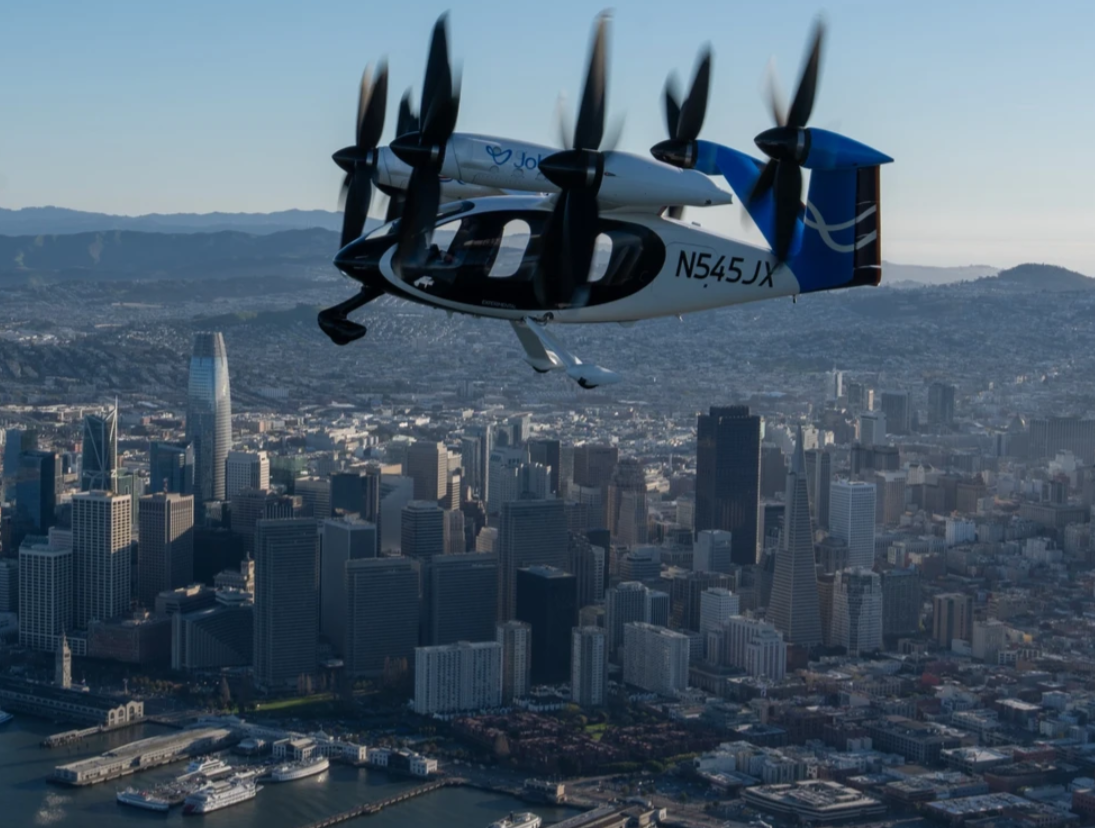
As of spring 2026, Joby had become the first eVTOL maker to clear Stage 4 of the FAA’s five-stage type-certification process, with Archer a stage behind, both targeting type certificates and first U.S. commercial service in late 2026 (FAA via Joby Aviation, March 2026; Archer Aviation Q1 2026 results, May 2026). And Joby’s aircraft carries five blades on each rotor — exactly the acoustic strategy Patrick describes (source: CompositesWorld, November 2025).
A Military Mindset
Patrick has done CFD work for Shield AI, a company known for drones and even more so for Hivemind, an AI pilot that flies drones in GPS- and comms-denied airspace and lets them operate in swarms. Patrick’s job was less glamorous — “pressing the button on the HPC and having it run” — using commercial tools: Star-CCM+, Cadence Fidelity Pointwise, and Flexcompute’s Flow360, which he calls “a joy to use.”
Pointwise gets the nod from Patrick. He calls meshing “therapeutic” — the discipline of coaxing a hundred-million-cell grid out of a complex geometry in under an hour, because a bad grid guarantees bad results no matter how good the solver. Cadence acquired it in 2021 and folded it into its Fidelity CFD line (source: Cadence, April 2021).
Back to Nature
The day before, I’d heard a simulation company claim it wanted to make prototypes obsolete. Patrick argues the opposite. “You’re not going to get an optimized drone unless you crash it a hundred times,” he says — there’s always something you didn’t model. Nature is the best simulator there is, and it keeps inventing failure modes that no code anticipated. Every engineer remembers being forced to watch Galloping Gertie, the Tacoma Narrows bridge that tore itself apart in 1940 because nobody had thought to treat resonance as a failure mode.
The perfect airfoil, as suggested by software, by AI, is still no match for a veteran engineer educated with aerodynamic theory and forged with aircraft experience. The air foil optimization program does not consider the whole aircraft, additions of a camera, a radar, more passengers, a longer wing… Sure, you can ask an AI for a new airfoil for five cents, Patrick says, only to spend millions to clean up after the damage.
__________
[i] O-level is short for [i] General Certificate of Education, Ordinary Level — which were subject-specific exams in the British education system, typically taken around age 16.
