

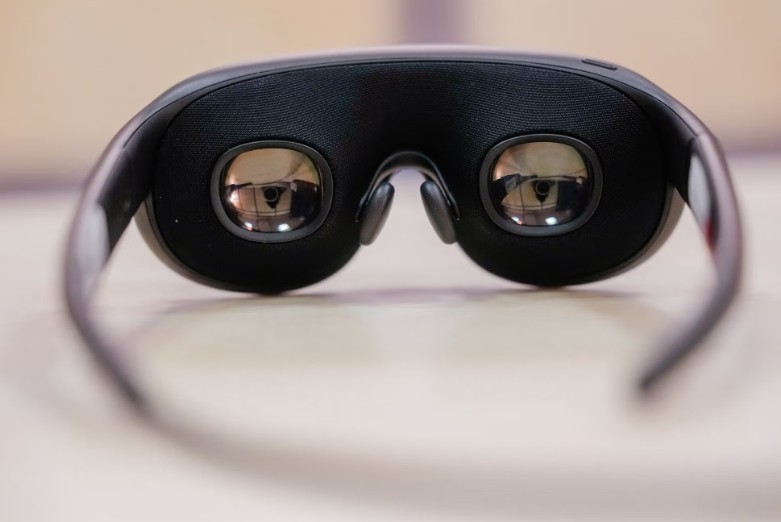
Meta is expanding its artificial intelligence strategy with three new smart glasses and additional capabilities for Muse, its recently launched AI agent. Announced at the company’s annual developer conference in Menlo Park, California, the products reflect CEO Mark Zuckerberg’s ambition to make AI an integral part of everyday computing, tells The New York Times (full article available to subscribers).
The lineup includes $1,300 virtual reality glasses designed for gaming, live sports, and immersive entertainment. Scheduled for release in spring 2027, the glasses connect to an external battery pack and target a broader audience than Meta’s Quest headsets.
A second model eliminates the camera to address privacy and surveillance concerns while retaining audio recording and AI connectivity. The third upgrades Meta’s existing camera-equipped smart glasses.
The devices feature six microphones and hearing-enhancement technology that Zuckerberg said has received FDA approval for hearing-aid functionality.
Central to Meta’s strategy is Muse, an AI agent capable of browsing the internet and operating software on users’ behalf. Upcoming features include video conversations with an animated avatar and dedicated email addresses that allow agents to complete tasks without requiring direct access to personal accounts.
Muse will also integrate with smart glasses through voice commands. Partnerships with Shopify and Expedia aim to extend its capabilities into shopping and travel.
All three glasses and Muse use Muse Spark, an AI model released in April by Meta Superintelligence Labs, led by chief AI officer Alexandr Wang. A more powerful model, code-named Watermelon, is expected in the coming weeks.
The announcements highlight Meta’s transition from its earlier metaverse-centered strategy toward personal AI. However, the company faces challenges in monetizing its substantial AI investments and expanding wearable adoption amid privacy concerns.
For engineers and technology developers, Meta’s products demonstrate the convergence of AI models, compact hardware, immersive displays, and voice interfaces in consumer computing.
