

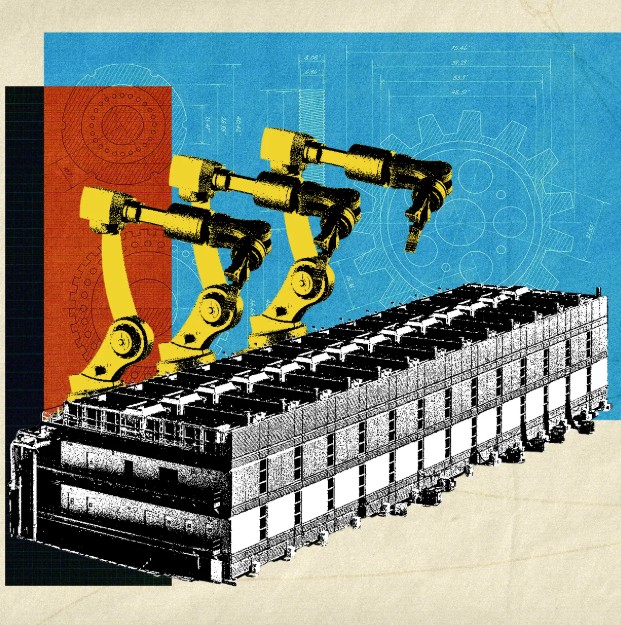
Meta is experimenting with robots that could perform physical tasks inside its rapidly expanding data centers, including plugging and replacing cables, restarting servers, moving equipment, and inspecting hardware. The effort could reduce labor requirements as the company increases spending on AI infrastructure, although Meta maintains that it continues to need skilled workers, tells Wired.com (full article available to subscribers).
The company is testing equipment from robotics manufacturers including Kinova, ABB, and Watney Robotics. One experiment uses a Kinova Gen3 robotic arm to power-cycle servers, while another robot is being evaluated for swapping networking cables. Meta has also deployed simpler machines capable of remotely pressing power buttons to restart devices. Company robotics leaders see automation as a way to improve incident response, environmental monitoring, and preventive maintenance.
Meta already operates self-driving tugger robots that transport heavy server racks and wheeled robots that scan barcodes for inventory. At its Altoona, Iowa, data center, dual-armed Watney robots are being tested for cabling work. ABB robots at Meta’s Prometheus campus in New Albany, Ohio, are being used to reseat components and could eventually perform additional tasks with less human supervision.
The technology remains far from replacing technicians entirely. Inventory robots can struggle with corners and floor cables, move slowly, and require human assistance between buildings. Battery charging creates additional downtime. Robots also cannot yet handle complex cabling tasks associated with systems such as Nvidia’s GB300 supercomputer.
Workers nevertheless worry about what greater automation could mean for employment. One employee estimated that successful cable-swapping robots could eliminate as much as 80% of certain workloads. Meta counters that it is investing in training and apprenticeship programs to address shortages of skilled data center workers.
The experiments highlight both the potential and limitations of data center robotics. Automation could eventually handle repetitive or hazardous work, but today’s facilities and equipment were largely designed around human technicians. Scaling robotics may therefore require redesigning data center hardware as well as improving the robots themselves.
