

Meta researchers have unveiled a groundbreaking ultrathin, flat-panel laser display—just 2 mm thick—that promises to reshape augmented reality (AR) through enhanced compactness, brightness, and color fidelity, reports IEEE Spectrum.
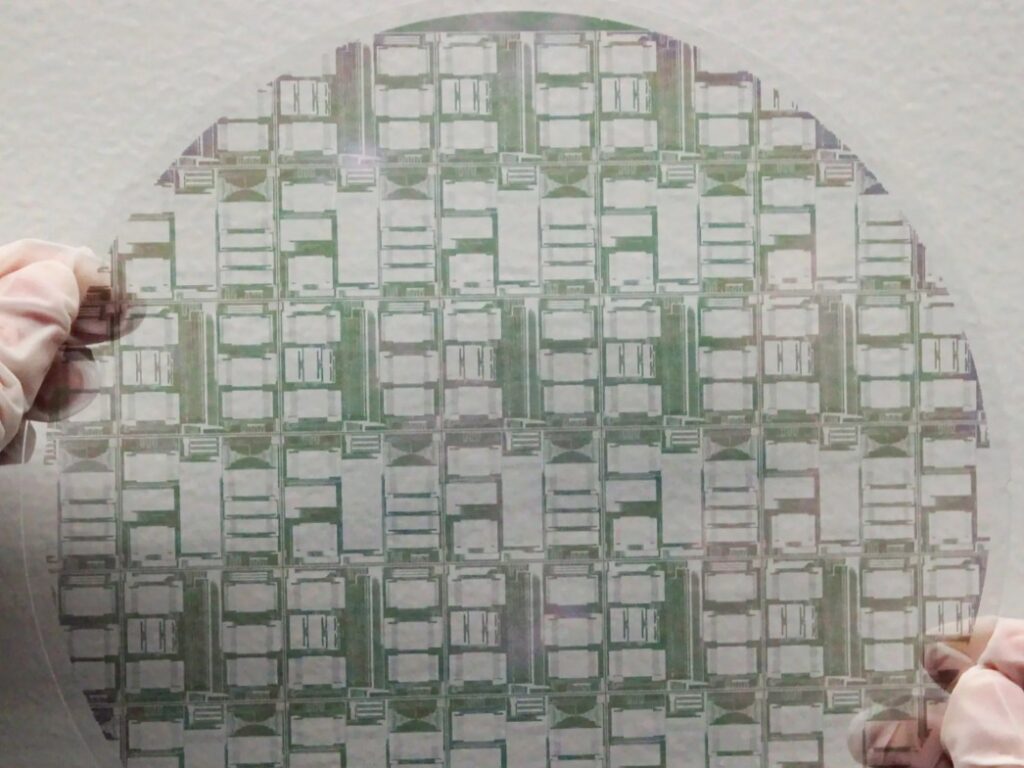
Unlike conventional laser displays that depend on bulky projectors with complex optics, Meta’s system integrates a photonic integrated circuit (PIC)—a centimeter-scale chip with thousands of optical components—directly with a 5 × 5 mm liquid-crystal-on-silicon (LCoS) panel, achieving an ultrathin form factor while outperforming standard displays.
This ultrathin configuration offers critical advantages for AR:
- Exceptional brightness—essential for see-through displays used outdoors.
- Superior color range, with 211% of the standard color gamut, delivering vivid and lifelike visuals.
- Compatibility with CMOS fabrication, meaning the technology is scalable and suitable for mass production.
The team demonstrated the display’s feasibility within a see-through AR prototype in an office environment, paving the way for ultra-compact AR glasses and future holographic systems.
In essence, the ultrathin laser display delivers:
- Slim form factors, allowing AR glasses to be as sleek and lightweight as regular eyewear.
- Enhanced visibility and realism, with bright, richly colored overlays even in challenging lighting.
- Manufacturing potential, thanks to well-established chip fabrication processes.
Overall, Meta’s ultrathin flat-panel laser display marks a significant leap forward in AR display technology—bridging invisibility in design with luminance and immersion in experience.
