

Pirros co-founder and CEO Ari Baranian used his own home renovation to test Mira, the company’s AI agent for Revit. Although Baranian had worked as a structural engineer, he had never modeled a house in Revit or used its family editor. Mira allowed him to build and modify the model largely through plain-English instructions, tells Pirros.
The process began with a floor plan image from the home’s real estate listing. Mira imported the image and traced its walls in Revit. Because the listing dimensions were approximate, Baranian measured the actual house and asked Mira to correct discrepancies. The resulting existing-condition model was shared with the interior designer and structural engineer.
Mira then helped redesign the interior, including doubling the kitchen size, opening the main floor, moving a bathroom, adding doors and windows, and positioning furniture. It could also inspect its own work. When several casement windows were modeled opening in the wrong direction, Mira identified and corrected them.
One of its most useful capabilities involved Revit families. Baranian could request cabinet dimensions or configurations without learning the family editor. Mira works through the Revit API and can create tools when an existing one does not fit the task. It presents its plan before making changes, allowing the user to approve, modify, or stop the action.
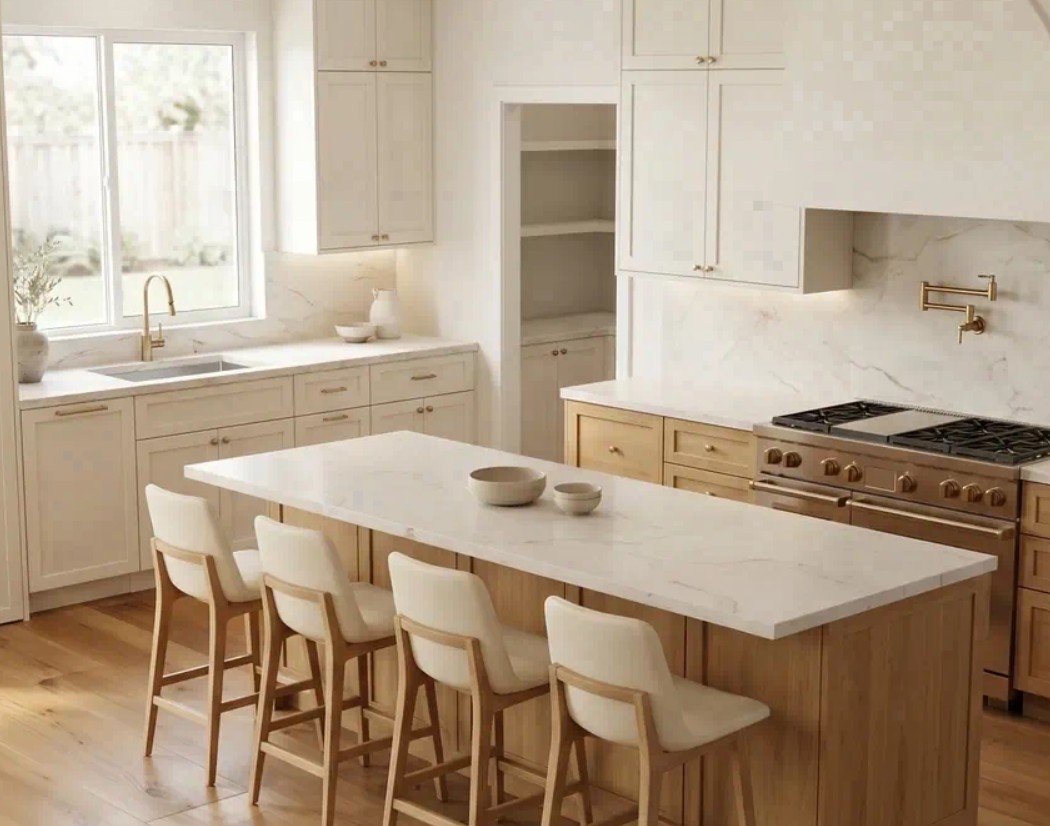
The Revit model also became the foundation for nearly 500 AI-generated interior renderings. Mira positioned 3D cameras and exported views, which Baranian then processed with Google Gemini. Using actual Revit views helped preserve room dimensions and architectural features while experimenting with finishes.
For architecture and engineering firms, the experiment illustrates Mira’s potential to automate repetitive modeling and documentation while helping less-experienced users learn Revit. Still, Baranian stresses that the AI makes mistakes. Designers must review its work, correct errors, and remain responsible for final decisions.
