

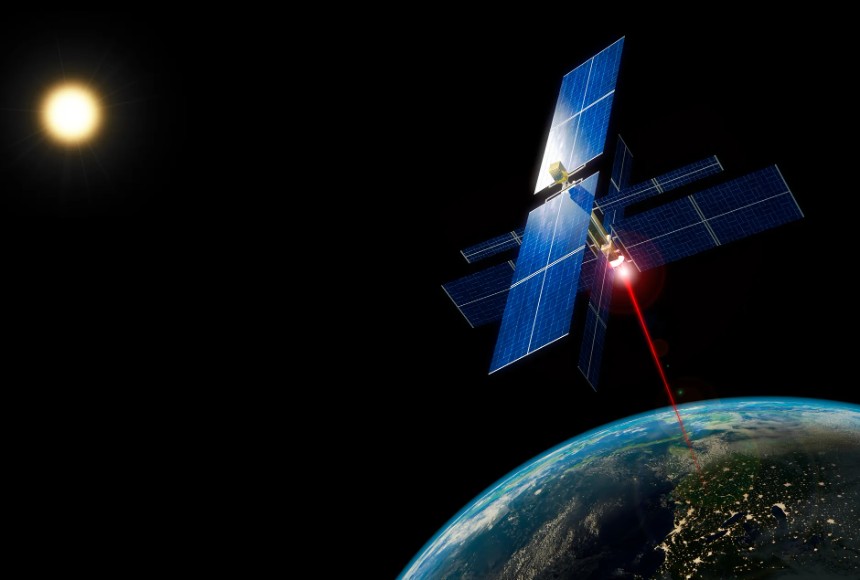
The U.S. Federal Communications Commission (FCC) has approved the launch of Eärendil-1, an experimental satellite developed by California startup Reflect Orbital that aims to reflect sunlight onto Earth after dark. Equipped with an 18-meter ultrathin reflective film, the satellite will test whether sunlight can be redirected to illuminate areas roughly 5–6 kilometers wide. The company envisions applications ranging from extending the operating hours of solar power plants to supporting nighttime search-and-rescue missions, emergency response, and remote construction projects. The approval marks a significant milestone for a concept that has generated both excitement and controversy, tells Wired.com (full article available to subscribers).
Reflect Orbital argues that redirecting sunlight from space could help overcome one of solar energy’s biggest limitations by enabling electricity generation after sunset. The demonstration mission will focus on validating the performance of its lightweight, highly reflective mirror technology rather than delivering a commercial service. If successful, the company hopes to expand the concept into a much larger constellation of satellites capable of providing on-demand illumination across different regions of the world.
The project has drawn strong criticism from astronomers, environmental organizations, and dark-sky advocates. They warn that artificial sunlight reflected from orbit could interfere with astronomical observations, increase light pollution, disrupt wildlife behavior, and alter natural day-night cycles that regulate ecosystems and human health. Aviation experts have also raised concerns about glare affecting pilots. Nearly 2,000 public comments opposing the proposal were submitted during the FCC review process.
Despite these objections, the FCC concluded that many of the environmental and scientific concerns fall outside the agency’s regulatory authority for this authorization. The approval applies only to the single demonstration satellite, not the company’s long-term vision of deploying tens of thousands of mirrors. Reflect Orbital has pledged to work with scientists and other stakeholders, collect real-world performance data, and adjust future deployments if necessary. The mission now represents an early test of whether space-based sunlight can become a practical technology without creating unacceptable consequences for science, nature, and society.
