

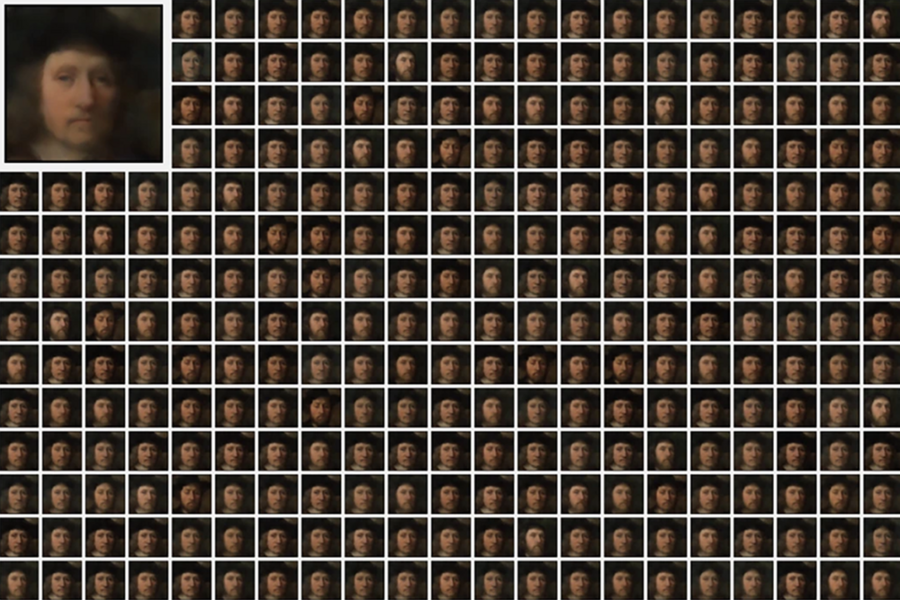
Researchers at MIT’s Computer Science and Artificial Intelligence Laboratory have discovered that identifying which training images contributed to an AI-generated picture may become impossible as training datasets grow. The phenomenon, called attribution decay, could complicate debates over copyright, artist compensation, and responsibility for generative AI outputs, tells MIT News.
The researchers found that removing a single image from a sufficiently large training dataset often has virtually no effect on what an AI model generates. The same can happen when researchers remove every image by a particular artist or every photograph of a specific person. If eliminating the data does not change the output, the researchers argue that the output cannot meaningfully be attributed to that data.
Testing this relationship has traditionally been difficult because determining an image’s influence would require repeatedly retraining a model without specific training examples. Instead, the MIT team developed a diffusion ensemble composed of smaller models trained on different portions of the dataset. Researchers can disable components exposed to a particular image and observe the resulting output without retraining the entire system.
The team compared its approach with 24 conventional diffusion models and found comparable image quality. Researchers then trained 24 ensembles using datasets ranging from 256 to more than 160,000 images drawn from seven public collections. As datasets increased in size, individual examples had progressively less influence on generated images. Additional tests involving 1,282 separately trained models supported the finding.
The research has significant implications for copyright. If generated content cannot be traced to individual training examples, determining whether an output is derivative becomes more complicated. The researchers suggest AI companies could eventually use similar techniques to demonstrate that generated images are not derivatives of specific copyrighted works.
However, the findings currently apply to diffusion models, widely used for image and audiovisual generation. Whether attribution decay also occurs in large language models remains unresolved. That distinction will matter as courts, creators, and technology companies continue debating ownership and compensation for AI-generated content.
