

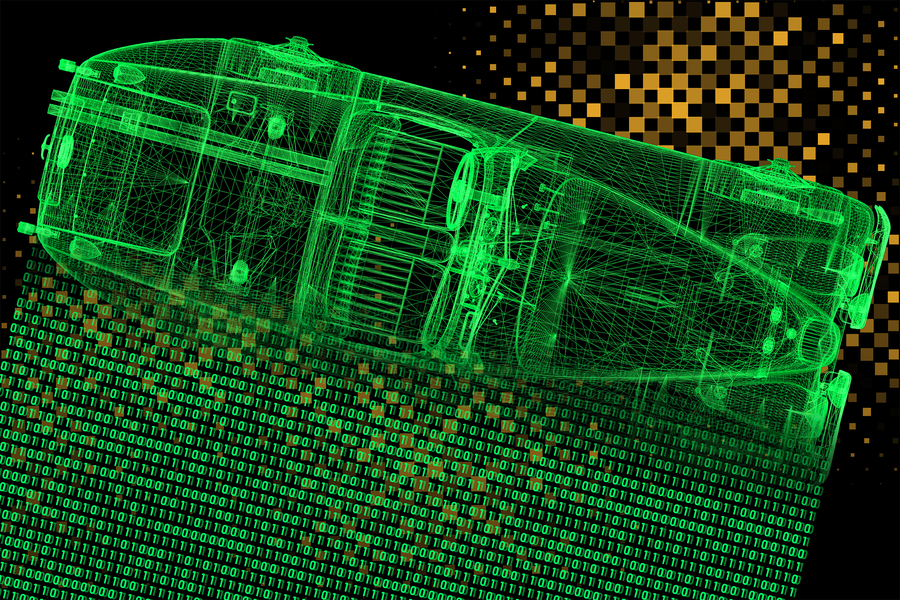
Researchers at MIT have developed an artificial intelligence system that transforms two-dimensional images into editable three-dimensional models, streamlining one of the most time-consuming steps in product design and rapid prototyping. The technology enables designers to generate accurate 3D representations from simple sketches or images, reducing the need for extensive manual modeling while preserving the flexibility to refine the final design before manufacturing, tells MIT News.
The system addresses a longstanding challenge in computer-aided design. Traditional 3D modeling software requires significant expertise and time to convert ideas into printable objects. Existing AI image-to-3D tools often produce visually appealing models but generate irregular geometry that is difficult to edit or manufacture. MIT’s approach instead creates structured, editable computer-aided design models that can be modified using conventional CAD software, making them suitable for engineering and fabrication rather than visualization alone.
The researchers trained the model to understand the geometric relationships between two-dimensional shapes and their corresponding three-dimensional forms. Instead of predicting every surface directly, the system reconstructs objects using parametric design principles that capture dimensions, curves, and structural features. This results in cleaner geometry that designers can easily adjust to meet functional or manufacturing requirements.
The technology is particularly valuable for rapid prototyping, where speed and flexibility are essential. Designers can sketch an idea, convert it into an editable 3D model, make design refinements, and quickly produce a physical prototype using additive manufacturing or other fabrication methods. The streamlined workflow reduces repetitive modeling tasks, allowing engineers to spend more time evaluating performance and improving designs.
Potential applications extend beyond consumer product development. The system could support industrial design, robotics, architecture, medical devices, and educational environments where fast iteration is critical. By lowering the technical barriers to creating editable 3D models, the technology could also make digital design tools more accessible to users with limited CAD experience.
The researchers emphasize that the system is intended to assist rather than replace designers. Human expertise remains essential for validating functionality, manufacturability, and aesthetics. By combining AI-generated geometry with established CAD workflows, the MIT team demonstrates a practical path toward faster, more efficient product development while maintaining the precision required for engineering applications.
