

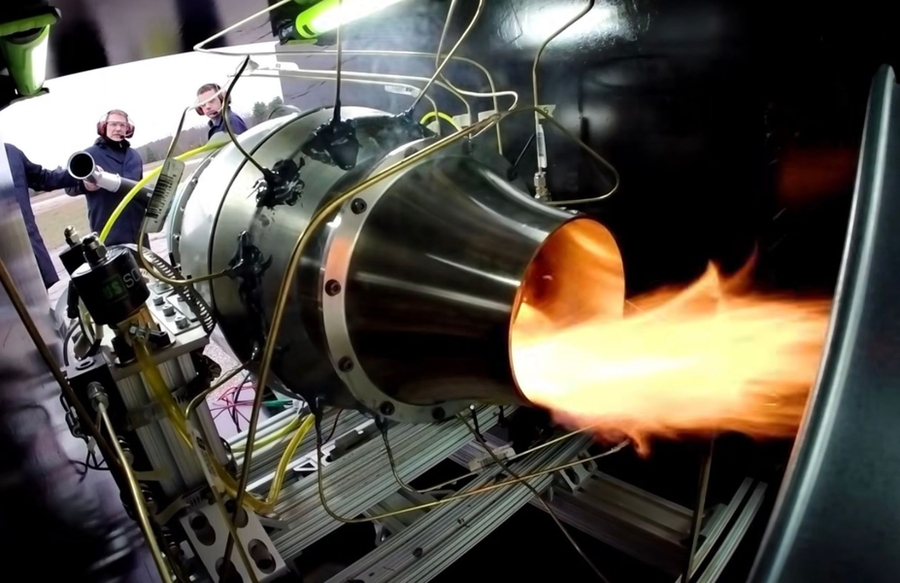
Can artificial intelligence design a working jet engine? That question was at the center of the JARVIS Challenge, an experimental competition led by MIT’s Gas Turbine Laboratory. The challenge asked 31 undergraduate students, organized into seven multidisciplinary teams, to design, fabricate, assemble, and test a small gas turbine engine in just four weeks using AI copilots as their primary engineering partners. Rather than measuring whether AI could replace engineers, the project examined where AI accelerates engineering work and where human expertise remains essential, tells MIT News.
Teams relied on MIT’s Parley platform, which provided access to multiple frontier large language models while allowing researchers to track prompts, model selection, and costs. Participants had broad freedom in engine design, materials, and manufacturing methods. Many students entered the competition with little or no experience in turbomachinery, making the challenge an ideal test of AI’s ability to support learning and technical problem-solving under real engineering constraints.
The results showed that AI was most effective during the early stages of development. Students used it to summarize technical references, learn unfamiliar software, compare design concepts, identify suppliers, and organize project documentation. However, its value declined as projects moved into detailed engineering. AI frequently produced inaccurate calculations, unrealistic design recommendations, and fabricated technical information. Teams that treated AI as an assistant rather than an authority consistently performed better, relying on engineering judgment, experimentation, and collaboration to validate every recommendation.
Two teams successfully completed full engine testing, demonstrating that AI can significantly compress portions of the design-build-test cycle without eliminating the need for skilled engineers. Researchers concluded that the most effective workflow combines AI’s speed in gathering and organizing information with human expertise in interpreting physical behavior, making design tradeoffs, and solving unexpected manufacturing challenges.
Beyond evaluating current AI tools, the JARVIS Challenge provides a blueprint for engineering education in the AI era. MIT researchers believe future engineers will increasingly work alongside AI copilots, but success will depend on deep technical knowledge, critical thinking, and hands-on experience. The competition suggests that AI can enhance engineering productivity, yet it cannot replace the creativity, judgment, and accountability required to build reliable, safety-critical systems.
