

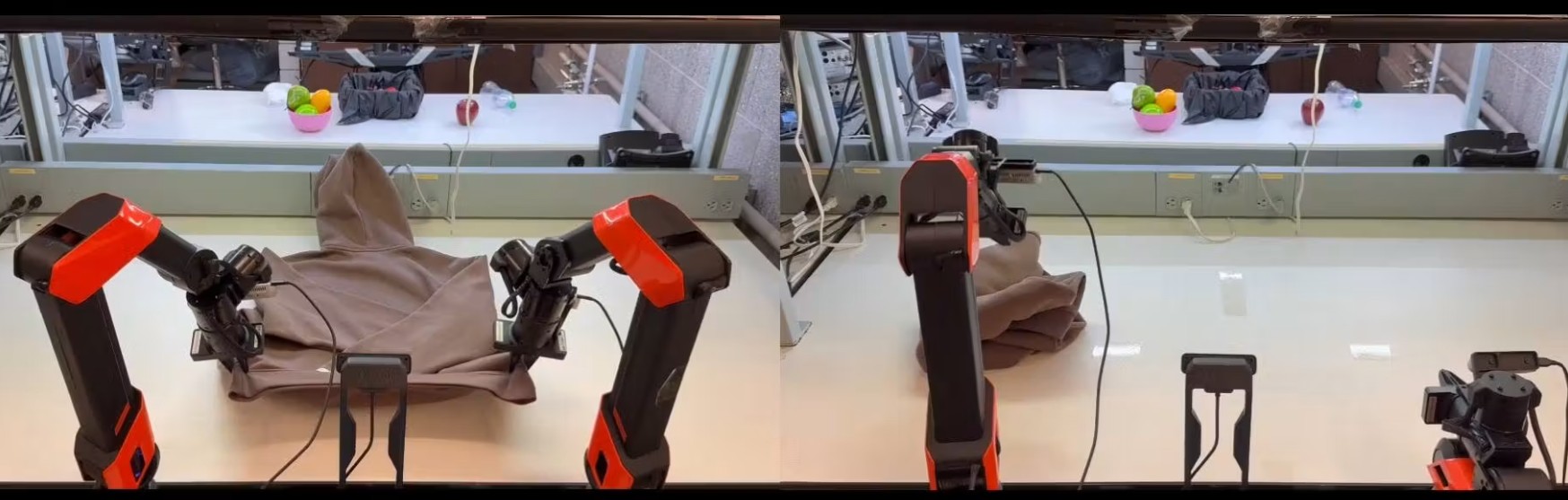
Vision-language-action (VLA) models have emerged as a powerful approach for controlling robots by combining visual perception, language understanding, and motion planning. However, these systems often suffer from a major drawback: execution latency. Because VLA models require significant computation to plan each movement, robots frequently pause between actions, producing slow, jerky motions that limit their effectiveness in dynamic environments, tells Machine Design.
Researchers at MIT have developed a new framework called VLASH that tackles this challenge by allowing robots to think ahead while they are still moving. Instead of waiting for one sequence of actions to finish before planning the next, VLASH predicts the robot’s future position and uses that information to generate upcoming movements in parallel. This asynchronous planning process dramatically reduces idle time without increasing computational overhead.
The framework addresses a key limitation of conventional VLA systems, which base future actions on outdated observations. By estimating where the robot will be after completing its current motion, VLASH creates a smoother transition between action sequences. This enables robots to react much faster to changing conditions while maintaining precise control.
MIT researchers also introduced an action quantization technique that groups movements into larger action chunks. Although this slightly reduces accuracy, it significantly boosts execution speed, allowing robots to complete tasks two to three times faster. To ensure reliable performance, the team developed a specialized training method that teaches the model to plan using predicted future states instead of current observations. This approach speeds training by five times while reusing existing data.
Testing showed impressive results. Robots performing sorting, stacking, and pick-and-place operations completed tasks about twice as fast as conventional methods while maintaining roughly 90% accuracy. Reaction latency improved by as much as 30 times, enabling demanding applications such as table tennis and Whack-a-Mole that require rapid responses.
The researchers believe VLASH provides an important step toward more responsive physical AI systems. They plan to combine the framework with advanced world models that can predict future environmental changes, opening the door to faster, more capable robots for manufacturing, logistics, and other real-world applications.
