

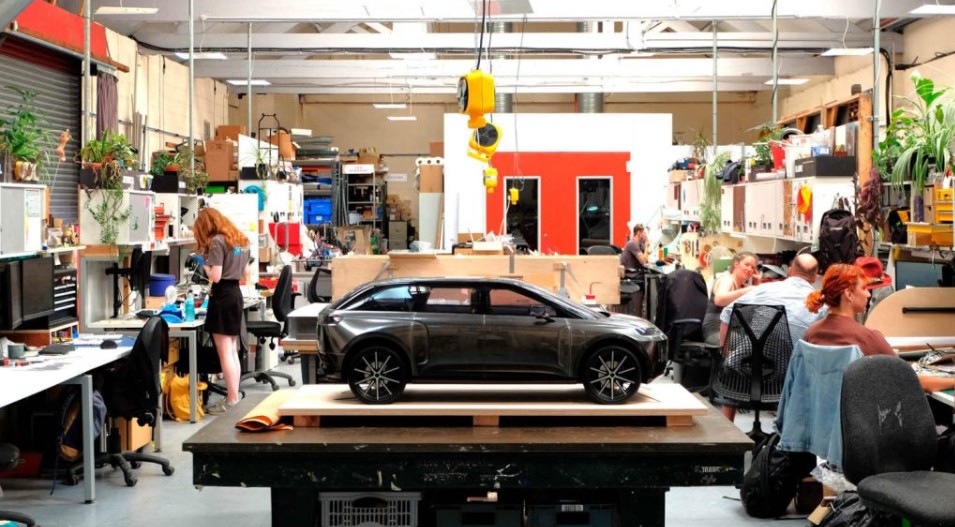
The increasing accessibility of desktop 3D printing has transformed traditional modelmaking, prompting specialist companies to rethink their business strategies. Gabrielle Brown of Develop 3D visits Amalgam Modelmaking’s Bristol workshop to explore its response to technological advances and changing customer requirements.
Originally specializing in architectural models and product development prototypes, Amalgam has diversified into exhibition displays, film props, public art installations, and customized models.
Affordable desktop 3D printers have enabled product development teams to handle routine prototyping internally, reducing demand for outsourced services. However, exhibition models represent a growing commercial opportunity, particularly when customers require oversized product replicas incorporating lighting, mechanical assemblies, and moving components.
Amalgam combines additive manufacturing, computer numerical control (CNC) machining, material expertise, and specialist finishing techniques to create lightweight models that resemble wood or metal structures.
Digital design tools are integral to these workflows. Modelmakers use SolidWorks and Rhino for CAD modeling, Ansys SpaceClaim for processing 3D scanning data, and KeyShot for visualizing concepts and facilitating customer approvals.
Artificial intelligence (AI) is also influencing early design discussions. Customers increasingly arrive with AI-generated concepts that communicate their expectations more effectively. Nevertheless, translating these ideas into functional physical models requires professional design expertise, ergonomic considerations, and technical validation.
For product designers and engineers, the article raises an important consideration when evaluating prototyping strategies: access to affordable fabrication equipment does not necessarily eliminate the need for specialist manufacturing knowledge.
Complex projects benefit from iterative development, direct customer feedback, and experienced professionals who understand material behavior, fabrication constraints, and finishing requirements. These considerations become particularly important when balancing visual authenticity, structural integrity, portability, and production costs.
Amalgam’s evolution illustrates the continuing commercial relevance of specialist modelmaking. As digital fabrication technologies become more accessible, technical versatility, creative problem-solving, and traditional craftsmanship remain valuable differentiators in transforming ambitious design concepts into compelling physical experiences.
