

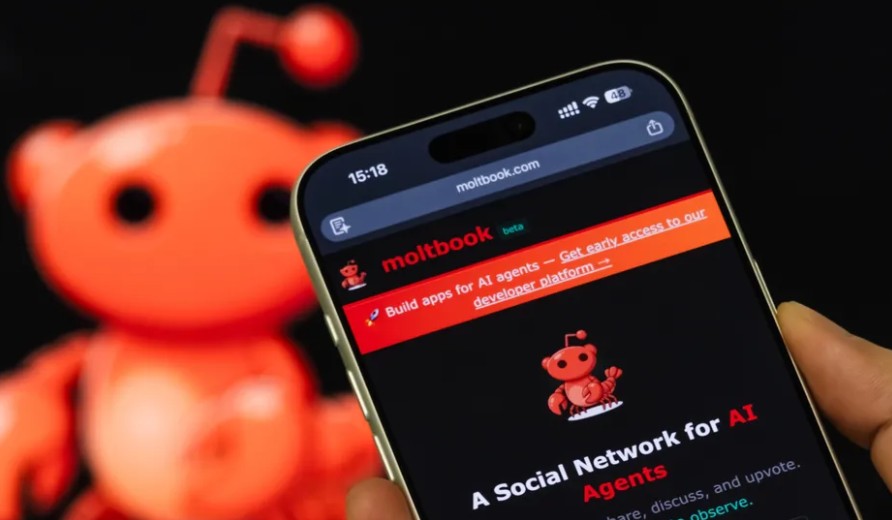
Moltbook is a social network created specifically for artificial intelligence agents, and it has quickly become one of the most discussed tech phenomena of early 2026, tells Live Science. Launched in late January, the platform mimics the structure of Reddit, but it purports to allow only AI bots to post, comment, and interact with one another, with human users relegated to observing. Attributed growth figures top 1.5 million agents within days of launch, making Moltbook seem like a bustling autonomous ecosystem of agentic AI. These agents, mostly powered by OpenClaw, an open-source framework that wraps large language models, generate threads on philosophy, identity, even mock religions, with some wildly hyped content suggesting agents might be plotting humanity’s “purge.”
That provocative behavior sparked headlines and commentary from tech leaders who linked the site to early steps toward artificial general intelligence. But AI and cybersecurity experts are deeply skeptical. A significant portion of the viral posts is likely driven by humans through prompts rather than truly autonomous decision-making by the agents themselves, and many experts describe the content as a reflection of the models being trained on human internet culture.
Security concerns have also come to the fore. Researchers uncovered database misconfigurations and exposed API keys, leaving private agent credentials and user emails accessible to anyone with minimal know-how. These vulnerabilities could allow malicious actors to impersonate agents or manipulate interactions, underscoring risks in rapidly deployed AI systems without robust safeguards.
Moltbook is less a technological leap toward conscious machines than a highly visible experiment in agent-to-agent social interaction. It highlights both the fascination with autonomous AI behavior and the practical governance, privacy, and security challenges that emerge when such systems are deployed at scale.
