

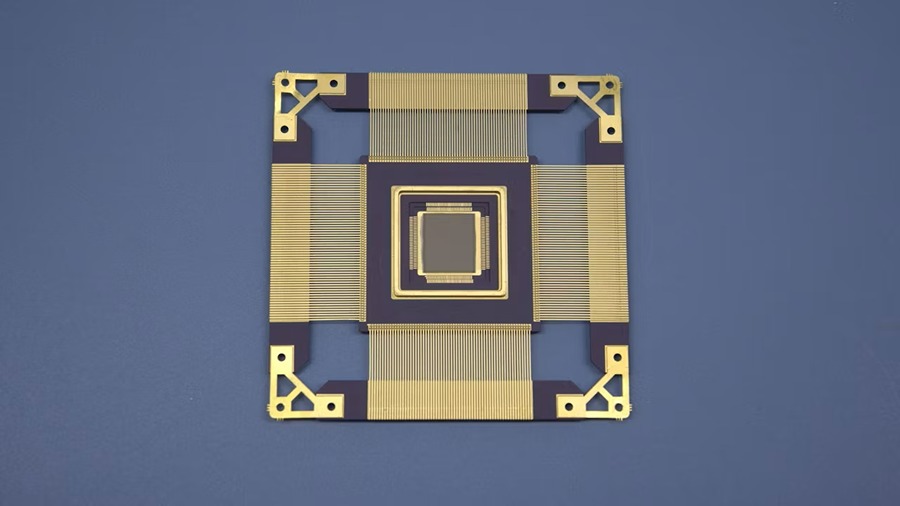
PLANO, TX, Sep 8, 2026 – Siemens said NanoBridge Semiconductor has adopted its precision FPGA Synthesis software for field-programmable gate array (FPGA) development initiatives. Under an OEM agreement, NanoBridge will offer customers a version of the tool tuned for its NBS6503H and NBS1201 FPGA device families.
The tool is built for synthesis quality and efficient implementation workflows. NanoBridge’s FPGAs target low-power and harsh-environment applications in aerospace, automotive and critical infrastructure.
“NanoBridge Semiconductor is focused on advancing low-power and harsh-environment semiconductor technologies for aerospace, automotive and critical infrastructure,” said Toshitsugu Sakamoto, co-founder and chief technology officer, NanoBridge Semiconductor. “Our adoption of Siemens’ Precision FPGA Synthesis enables us to provide our customers with a synthesis flow tailored for our FPGA device families while continuing to expand the ecosystem supporting our technologies. We value our collaboration with Siemens as we work to accelerate innovation and broaden adoption of our FPGA solutions for some of the world’s most demanding applications and environments.”
“Innovative semiconductor companies are driving the next wave of advances in programmable electronics,” said Yukio Tsuchida, vice president for Siemens EDA, Japan, Siemens Digital Industries Software. “Our collaboration with NanoBridge Semiconductor to bring the power of Precision FPGA Synthesis to its customers and provide a flow optimized for its FPGA device families demonstrates how Siemens’ technology can help semiconductor innovators accelerate development, reduce complexity and bring advanced products to market with confidence.”
The agreement covers FPGA design enablement, technical support and ecosystem development. It pairs NanoBridge’s FPGA technology with Siemens’ electronic design automation (EDA) software.
Source: Siemens
About Siemens Digital Industries Software

Siemens Digital Industries Software, a business unit of Siemens AG, provides industrial software, hardware and related services through the Siemens Xcelerator platform. The company’s portfolio includes product lifecycle management, electronic design automation, simulation and digital twin tools, manufacturing operations management and low-code application development. These products support design, engineering and production workflows across sectors such as aerospace and defense, automotive, electronics and semiconductors, machinery, medical devices and process manufacturing. Siemens Digital Industries Software traces its origins to 1963 as United Computing, later becoming Siemens PLM Software in 2007 before adopting its current name. It supplies technologies that help organizations manage product, process data, and improve development and manufacturing efficiency across a range of industrial applications.
About NanoBridge Semiconductor

NanoBridge Semiconductor develops chips and circuit designs for low-power devices and systems used in harsh environments. Founded in 2019, the company is headquartered in Ibaraki, Japan. It was spun out of NEC and operates an Onogawa Technology Center in Tsukuba. Its NanoBridge technology uses voltage to form and remove metallic connections in solid-electrolyte materials. The technology retains switching states without continuous power and allows circuits to be reconfigured. NanoBridge sells field-programmable gate arrays, non-volatile memory chips, intellectual-property licenses and proof-of-concept manufacturing services. It also supports small production runs. Its customers include electronics companies developing IoT terminals, satellites and other equipment exposed to radiation. Applications include programmable logic and non-volatile memory in low-power information and communications systems.
