
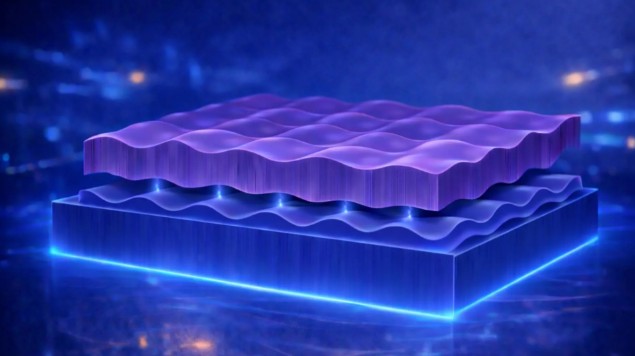
Researchers at the Chalmers University of Technology in Sweden have developed a new approach that could make superconductors more practical for next-generation electronics. By carefully engineering the surface beneath an ultrathin superconducting material, the team significantly improved the material’s ability to remain superconducting at higher temperatures and in stronger magnetic fields. The discovery addresses one of the longstanding challenges facing superconducting technologies and could support the development of more energy-efficient electronic devices.
Superconductors are materials that conduct electricity with zero resistance, eliminating energy losses that occur in conventional conductors. Despite their promise, most superconductors require extremely low temperatures and are highly sensitive to magnetic fields, limiting their use in everyday applications. The Chalmers researchers focused on ultrathin superconducting films, which are attractive for advanced electronics because of their small size and compatibility with modern manufacturing techniques.
Instead of altering the superconducting material itself, the researchers modified the substrate on which the material was deposited. By creating subtle nanoscale patterns and structures on the supporting surface, they were able to influence the behavior of electrons within the superconducting layer. The redesigned surface helped stabilize superconductivity, enabling the material to maintain its resistance-free state under conditions that would normally disrupt it.
The results showed improvements in both the critical temperature and the magnetic-field tolerance of the superconducting film. These gains are important because they bring superconductors closer to operating in real-world environments where temperature fluctuations and magnetic interference are common. The strategy also provides a new way to enhance performance without relying on complex chemical modifications or entirely new materials.
According to the researchers, the findings could contribute to the development of ultra-efficient electronics, quantum technologies, advanced sensors, and high-performance computing systems. By demonstrating that nanoscale surface engineering can dramatically improve superconducting properties, the study opens a promising path toward more practical and scalable superconducting devices for future energy and information technologies.
