

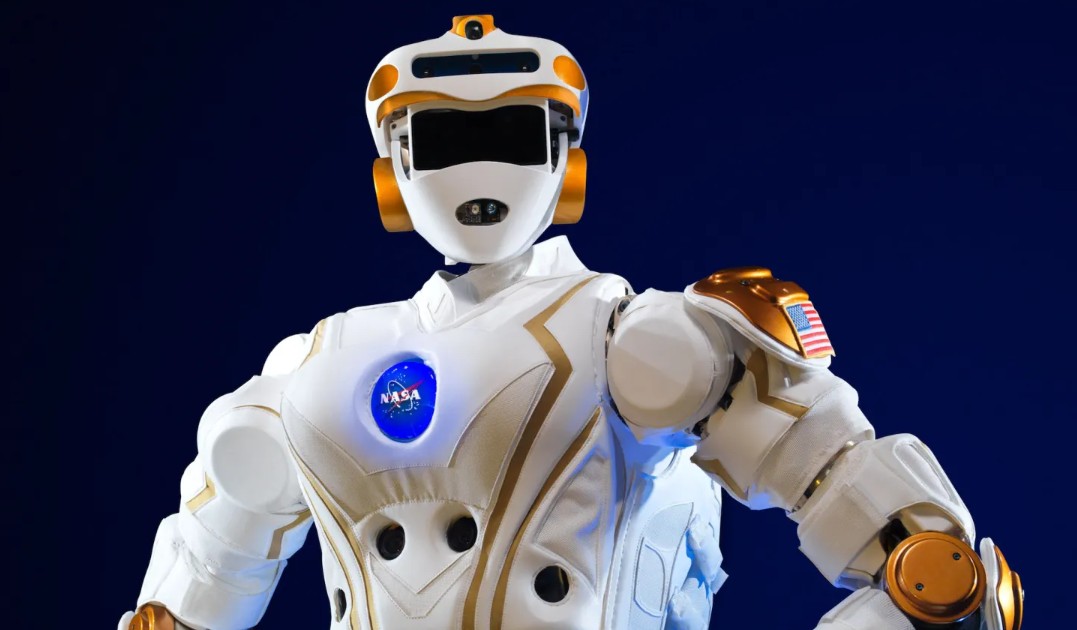
NASA is developing advanced humanoid robots that could work alongside astronauts during future missions to the moon and eventually Mars. Researchers at Johnson Space Center’s Dexterous Robotics Team are focusing on machines capable of performing demanding or dangerous jobs while making human exploration safer and more sustainable, tells Popular Science.
Building robots for space presents challenges far beyond terrestrial robotics. Machines must operate reliably despite microgravity, abrasive lunar dust, intense solar radiation, and other environmental hazards. NASA’s work therefore combines software development with mechatronics to create systems capable of functioning in conditions where failures could jeopardize missions.
The effort builds on more than 15 years of humanoid robotics research. NASA has developed Valkyrie, an upright bipedal robot completed in 2013, and Robonaut 2, a humanoid robot that has already operated aboard the International Space Station. Future descendants of these systems could transport equipment, conduct maintenance, and perform potentially hazardous repairs.
NASA is also using its Integrated Mobile Evaluation Testbed for Robotics Operations, or iMETRO, at Johnson Space Center to evaluate technologies before deployment. The facility includes simulated lunar rovers, living environments, and a rocky outdoor area resembling the lunar surface. NASA and private companies can use these environments to uncover operational problems before missions begin.
Some valuable robotic tasks may be relatively routine. In one demonstration, PickNik tested software enabling a robotic arm to recognize and open a spacecraft hatch before moving cargo bags through it.
NASA stresses that humanoid robots are intended to support astronauts rather than replace them. By assigning repetitive, physically demanding, or risky activities to machines, crews could spend more time on scientific research and exploration. The goal is a collaborative human–robot workforce capable of extending the safety, productivity, and sustainability of long-duration space missions.
