

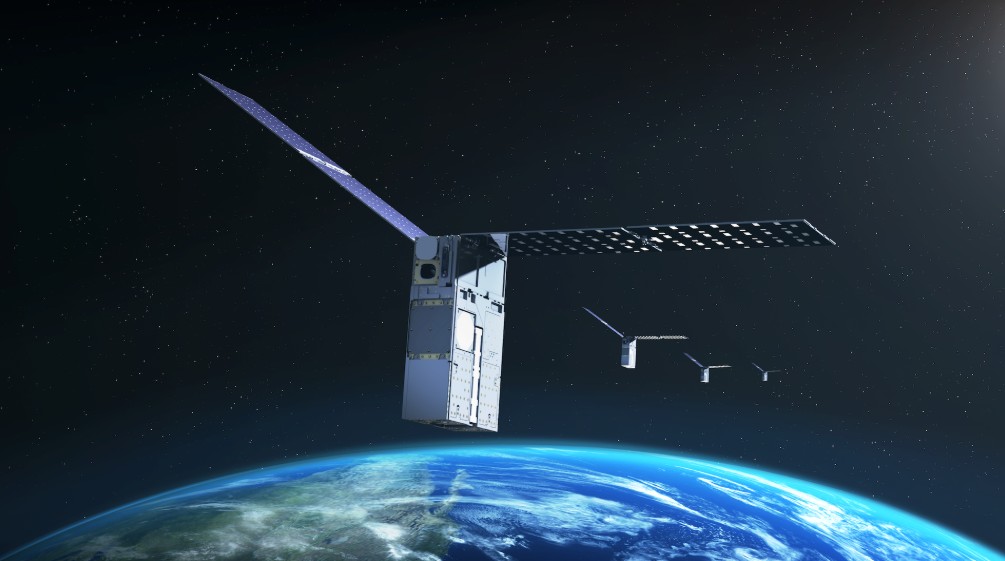
NASA’s Starling mission has demonstrated a new approach to autonomous satellite navigation that could reduce spacecraft dependence on GPS and ground-based tracking. The FALCON system determines a satellite’s orbit by observing other objects in space and using their known positions as references, tells NASA.
FALCON, short for Fast Autonomous Lost-in-space Catalog-based Optical Navigation, is a joint experiment involving NASA and EraDrive, a startup originating from Stanford University. The technology combines EraDrive’s Era-Core software and algorithms with Starling’s onboard cameras and a catalog of known space objects. This approach is particularly relevant beyond Earth orbit, where GPS signals can become unreliable or unavailable.
The system makes additional use of Starling’s star-tracker cameras, which normally help determine spacecraft orientation. During navigation experiments, the cameras observed other spacecraft and orbital debris. FALCON matched these observations with known objects in an onboard catalog and then used the verified objects as reference points to calculate Starling’s orbit.
FALCON also demonstrated autonomous space situational awareness. Engineers loaded a catalog containing approximately 20,000 space objects and their predicted orbits onto the spacecraft. By comparing this information with camera observations, FALCON refined both Starling’s location and the estimated positions of other objects. During a three-day experiment, it improved the known orbits of more than 200 objects without ground-operator intervention. NASA says this represents the first optical-camera-based demonstration of spacecraft self-orbit determination using relative positions to other space objects.
Such autonomy could become important for satellite swarms supporting future Moon and Mars exploration, distributed science missions, and space traffic management. Better onboard tracking could also strengthen collision avoidance while reducing reliance on ground infrastructure. Later in 2026, NASA plans to expand the experiment by allowing Starling’s four satellites to share tracking observations and collectively refine their positions.
