

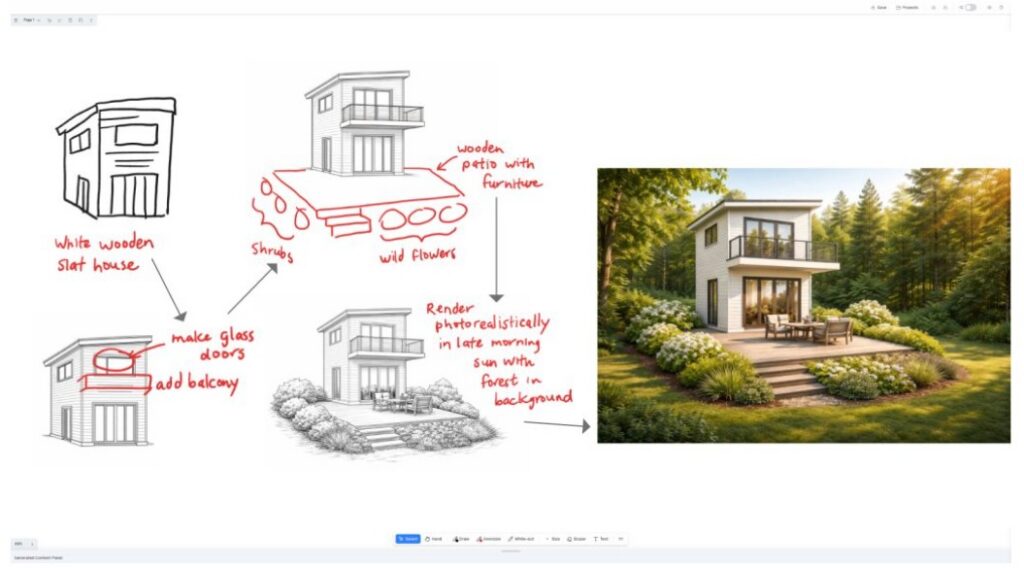
Autodesk believes the next major transformation in computer-aided design will come from neural CAD, a new class of AI foundation models trained specifically to understand and generate precise 2D and 3D geometry. Unlike large language models and image generators, which primarily reason through text and images, neural CAD is designed to work directly with geometric data and the physical characteristics of the three-dimensional world, says AEC Magazine.
The technology addresses a longstanding challenge in design software. Traditional parametric CAD systems provide exceptional precision and control but can be difficult to master, often requiring users to become software experts rather than focusing on their core disciplines. Neural CAD seeks to reduce that complexity by allowing users to interact naturally through speech, text, sketches, images, and other inputs. The AI can then generate editable CAD models, explore multiple design alternatives, and even create the sequence of commands needed to construct geometry within CAD applications.
Autodesk distinguishes neural CAD from approaches that rely on large language models to generate code for CAD software APIs. Instead, its models are trained directly on professional CAD objects and boundary representations, enabling them to reason about shape, form, structure, and performance. The company argues that this geometry-first approach produces more reliable and capable results when dealing with complex engineering and design challenges.
The development of neural CAD has been years in the making. Autodesk Research has spent more than 15 years exploring AI for geometry, culminating in initiatives such as Project Bernini and the creation of foundational models trained on real CAD data. The company expects these technologies to enhance products such as Fusion and Forma, improving conceptual design, accelerating decision-making, and preserving design intent throughout project development.
Autodesk also emphasizes the importance of trust, transparency, and responsible AI adoption. The company is developing benchmarking systems, anti-parroting safeguards, and transparency tools to help customers evaluate AI-generated results. Looking ahead, Autodesk envisions a future where neural CAD, parametric CAD, large language models, and agentic AI assistants work together. In that environment, professionals will spend less time navigating software and more time applying their expertise to solve complex design and engineering problems.
