

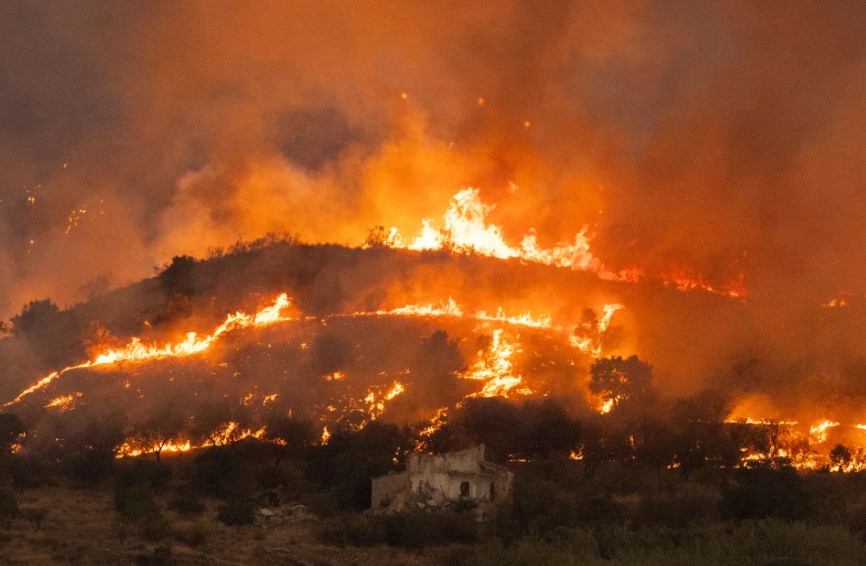
As severe wildfires spread across Spain and France, new technologies could help authorities detect, predict, and contain fires before they become uncontrollable. More than 741,000 acres have burned across the two countries, while hundreds of thousands of people have been evacuated. Extreme heat and unusually dry vegetation have intensified the danger, conditions increasingly associated with climate change, tells Wired.com (full article available to subscribers).
Spain has developed or tested several technologies for wildfire prevention and response. Ecofire is a biodegradable, water-based liquid made from organic substances. According to the article, it can extinguish fires up to 40 times more effectively than water and act 6–10 times faster. Applied preventively to vegetation, it creates an insulating layer that restricts heat and oxygen.
Early detection is another priority. Predifire combines artificial intelligence, sensors, and autonomous drones to identify fires when they cover only a few acres. By alerting authorities sooner, the system could reduce response times and help prevent emergency resources from becoming overstretched.
The European SenForFire project takes a sensor-based approach. Networks of inexpensive wireless sensors continuously measure combustion-related gases, environmental variables, and weather conditions. The data could reveal warning signs of a fire or indicate how an existing blaze may develop.
Researchers have also created the Wildfire Assessment Model, which uses neural networks, atmospheric information, and satellite measurements of vegetation. It predicts how far a wildfire could spread, estimates the time required to control it, and calculates the ground crews, aircraft, and other resources that high-risk areas may require.
Digital tools can also help residents respond to emergencies. Spain’s Civil Protection app provides warnings and emergency information, while Google Maps and Incendios España display wildfire locations and perimeters.
Together, these technologies demonstrate a shift toward earlier intervention, better forecasting, and data-driven firefighting as climate change increases the likelihood of destructive wildfires.
