

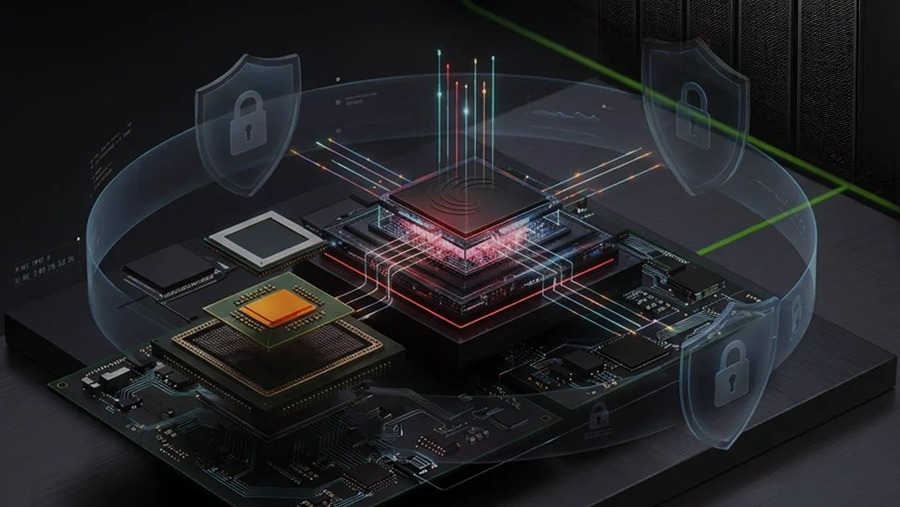
SAN JOSE, CA, Oct 22, 2026 – Cadence announced that Nokia is deploying Cadence AuraStack AI Super Agent on the Cadence Millennium M2000 AI supercomputer to automate electronic system design and analysis within its own computing environment. The deployment keeps sensitive engineering data and intellectual property under Nokia’s control.
The system combines AI agents, Cadence engineering software and NVIDIA Blackwell GPUs. Nokia can use it to automate engineering tasks, evaluate design trade-offs and complete multiphysics analysis loops across electronic systems. The modular millennium architecture supports multiple agent-driven engineering workloads in parallel and capacity expansion.
“Nokia’s deployment demonstrates how agentic AI can transform the way the world’s most advanced systems are engineered,” said Michael Jackson, corporate vice president of R&D for system design and analysis at Cadence. “Cadence uniquely brings together AI, computational software and accelerated computing in one platform, enabling Nokia to automate complex workflows, accelerate design convergence and protect critical IP.”
Design Automation and Simulation
The deployment integrates three technology layers:
- Agentic AI: Cadence AuraStack, built with NVIDIA Nemotron open models, automates and coordinates design tasks including schematic capture, placement, routing and multi-objective optimization.
- Cadence EDA and SDA technologies use GPU-optimized NVIDIA CUDA-X libraries, including cuDSS, and NVIDIA Omniverse for power integrity, thermal analysis, electromagnetic characterization and circuit simulation.
- Accelerated computing: Cadence Millennium M2000 systems provide a shared, expandable computing capacity for AuraStack AI Super Agent and Cadence engineering applications, using NVIDIA Blackwell GPUs.
“Cadence is helping us rethink how we approach electronic system design and heterogeneous integration,” said Derek Urbaniak, head of SoC development at Nokia. “The integrated platform enables our teams to evaluate complex tradeoffs and close multiphysics loops in a fraction of the time, while keeping sensitive engineering data and IP under our control. This helps us move advanced systems toward production faster.”
“AI gives engineering teams the speed to explore more designs and the insight to make better tradeoffs, while keeping proprietary data and expertise under their control,” said Tim Costa, vice president and general manager of industrial and computational engineering at NVIDIA. “Nokia is bringing that capability inside its own environment, with Cadence agents built with NVIDIA Nemotron open models and simulation powered by NVIDIA accelerated computing and NVIDIA CUDA-X libraries like cuDSS. Together, they connect design automation with the power, thermal and electromagnetic analysis needed to evaluate each iteration, while keeping proprietary data and IP under Nokia’s control.”
Available Applications
GPU-accelerated Cadence applications available on the Millennium M2000 include:
• Celsius Thermal Solver.
• Clarity 3D Solver.
• Quantus FS and EMX high-accuracy parasitic extractors.
• Spectre X circuit simulator.
• Voltus IC Power Integrity Solution.
The AuraStack AI Super Agent is available on the Millennium M2000 platform powered by NVIDIA Blackwell GPUs.
Source: Cadence
About Cadence

Cadence Design Systems is a U.S.-based technology firm that develops electronic design automation (EDA) tools, hardware, and IP for designing integrated circuits and electronic systems. Formed in 1988 through the merger of SDA Systems and ECAD, the company is headquartered in San Jose, CA. Cadence provides software and solutions for designing SoCs, PCBs, and complete electronic systems used in the semiconductor, automotive, aerospace and defense, telecommunications, and consumer electronics industries. Its tools support both digital and analog design workflows. Cadence employs about 12,000 people globally.
About Nokia

Nokia Corporation, founded in 1865 and headquartered in Espoo, Finland, develops telecommunications and networking technology for global markets. The company’s portfolio includes mobile and fixed network infrastructure, 5G systems, cloud solutions, and digital services. Nokia serves industries such as telecommunications, energy, transportation, public sector, and defense. As of 2024, the company employs about 87,000 people worldwide and reported annual revenue of €22.3B. Nokia Bell Labs, its research arm, leads innovation and intellectual property development. The company focuses on building high-performance networks that integrate across mobile, fixed, and cloud systems, enabling secure, reliable, and sustainable digital services for service providers, enterprises, and partners worldwide.
