

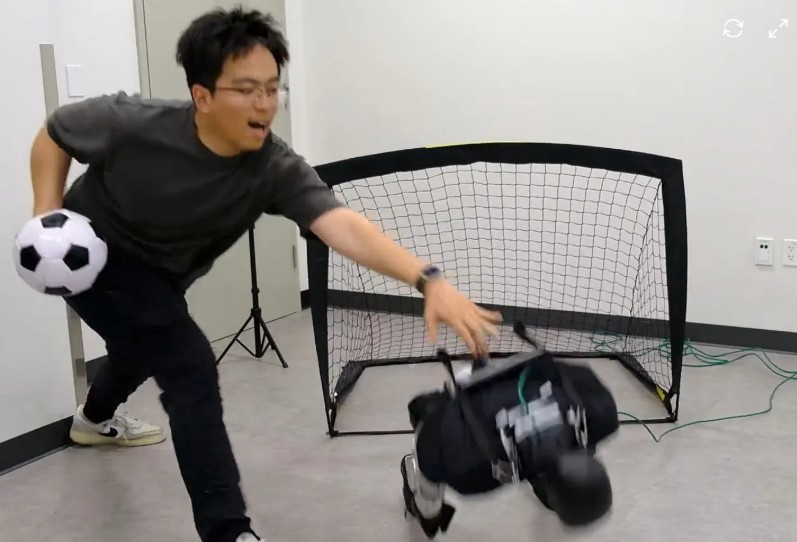
Humanoid robots are becoming increasingly capable, but impressive demonstrations do not necessarily translate into reliable real-world performance. Hardware FYI examines this gap while highlighting innovations in silent speech, quantum computing, mechanical engineering, and manufacturing.
One major challenge in robotics is generalization, or the ability to learn new tasks from limited examples. Physical Intelligence trained a robot to turn a sock inside out using 176 demonstrations, equivalent to approximately eight hours of training data. Newer systems from Generalist and Skild report learning capabilities from single demonstrations. Generalist achieved an average success rate of 59% across 10 tasks, while Skild demonstrated tasks lasting up to 10 minutes.
However, hardware reliability remains a concern. Robots must operate consistently for extended periods before widespread industrial adoption becomes practical.
The newsletter also examines Augmental’s approach to silent speech technology. Its wearable device rests against the chest and uses a stethoscope-like acoustic horn to capture whispered speech through body vibrations, even in noisy environments. The concept builds on earlier research involving skin-contact microphones and alternative speech interfaces.
For engineers interested in foundational knowledge, the publication highlights a free, approximately 40,000-word quantum computing guide covering theory, hardware, applications, and commercial prospects. Another educational resource connects mechanical engineering fundamentals, including forces, thermodynamics, and heat transfer, emphasizing practical reasoning when solving unfamiliar problems.
Manufacturing receives attention through Japanese terminology associated with the Toyota Production System. Concepts such as genchi genbutsu, meaning direct observation, and poka yoke, or mistake proofing, illustrate the continuing relevance of established production principles.
The newsletter also covers aerospace and transportation startups developing reusable rockets, autonomous cargo aircraft, underground transportation, and electric hydrofoil vessels.
Together, these developments illustrate how emerging technologies frequently depend on established engineering knowledge. Advances in robotics and hardware require more than sophisticated software. They also demand dependable mechanical systems, practical design decisions, and proven manufacturing methods.
