

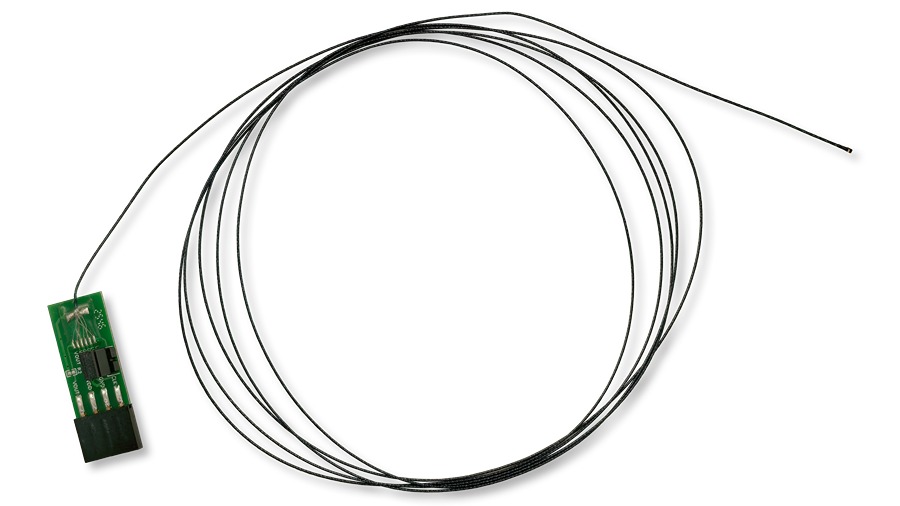
SANTA CLARA, CA, June 24, 2026 – OMNIVISION’s OVMed medical-grade LED cable modules are now available for single-use endoscopes, providing medical endoscope manufacturers with integrated image sensor, wafer-level optics, illumination, and cabling assemblies for chip-on-tip designs.
The modules support OCHTA, OCHFA, OCHSA and OCH2B CameraCubeChip. They are designed for medical endoscopes including ophthalmoscopes, nasopharyngoscopes, bronchoscopes, angioscopes, nephroscopes, ureteroscopes, choledochoscopes, spinoscopes, duodenoscopes, gastroscopes, laparoscopes, proctoscopes, cystoscopes, hysteroscopes, utero-renoscopes, colonoscopes and arthroscopes.
“The medical industry is moving toward smaller, higher-resolution CMOS chip-on-tip endoscopes with LED illumination and ultra-thin cable modules that can reach deeper inside the body. In addition, medical endoscope manufacturers need the flexibility to customize their designs for specific endoscopy procedures,” said Thomas Xu, senior medical product marketing manager, OMNIVISION. “As the medical industry’s leading image sensor provider, we are addressing our customers’ need for a turnkey imaging solution through our OVMed® family of cable modules and image signal processors. The compact, ultra-thin, customizable cable modules are medical-grade tested and ready for integration – reducing design and testing time and simplifying the supply chain.
OVMed cable modules move captured images from the distal tip of the endoscope through the endoscope shaft to the proximal end. The modules are designed around small module size, thin diameter, flexibility, mechanical robustness and cost, while providing high image quality with minimal artifacts.
The cable modules include EMC/EMI shielding in accordance with IEC 60601 requirements. The shielding is designed to help the cables withstand high energy discharges during multimodal medical imaging procedures and prevent interference with other medical devices.
OMNIVISION can customize the cable modules based on customer requirements, including the camera, cable type, end connectors, LED illumination and distal tip structure geometry. Standardized catalog products help customers shorten product development turnaround and time to market, while the company’s production capability supports a cost-effective approach.
OVMed cable modules are medical-grade components that undergo certification, qualification and testing, including operation tests, stress tests, and testing for banned substances, EMI/EMC, sterilization, biocompatibility, workmanship and waterproofing. All cable modules are manufactured in ISO 13485-certified facilities. This increases the likelihood and speed of FDA certification for medical endoscope manufacturers.
Source: OMNIVISION
About OMNIVISION

OMNIVISION, established in 1995, specializes in developing advanced digital imaging, analog, and touch and display technologies for both industrial and consumer markets. Its product portfolio includes CMOS (complementary metal-oxide-semiconductor) image sensors, ASICs, and CameraCubeChip modules, which are utilized across industries such as automotive, healthcare, security, computing, mobile devices, and emerging technologies. Its continued investments in R&D have positioned it as a major player in the image sensor market worldwide. Based in Santa Clara, CA, OMNIVISION operates globally, with offices in the Americas, Europe, and Asia. In 2019, Will Semiconductor, a China-based semiconductor company, acquired the business. The company employs over 3,500 people worldwide and serves thousands of customers across various sectors.
