

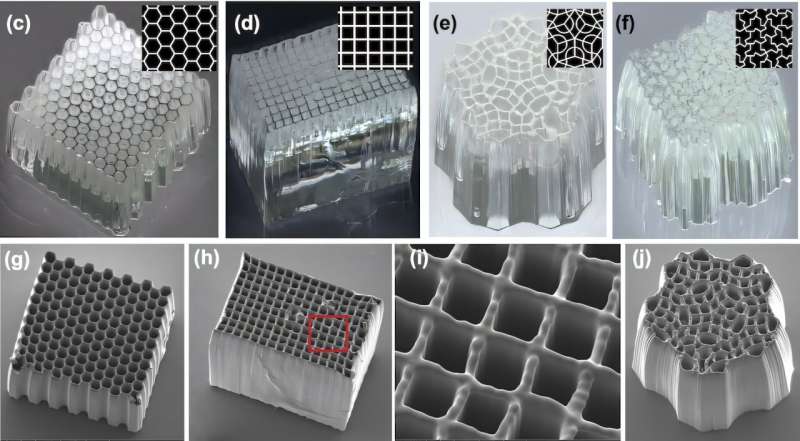
Researchers have developed a holographic 3D printing technique capable of fabricating entire objects in a single exposure, eliminating the layer-by-layer process used in conventional additive manufacturing, tells Tech Xplore. The breakthrough combines holography with volumetric printing to create complex three-dimensional structures almost instantly, offering a faster and potentially more versatile approach to manufacturing components for medicine, engineering, and optics.
Traditional 3D printers build parts one layer at a time, a process that can take minutes or hours depending on the size and complexity of the object. The new system instead projects a carefully calculated three-dimensional holographic light field into a photosensitive resin. The resin solidifies only where the light intensity reaches a specific threshold, allowing the entire object to form simultaneously rather than sequentially. This approach dramatically reduces production time while maintaining precise geometric control.
A key innovation lies in the computational design of the holographic light patterns. Researchers generate a digital hologram that accurately distributes light energy throughout the resin volume, ensuring that every part of the object is cured at the correct location. Because the entire structure is created in one shot, the process avoids many of the alignment issues, layer defects, and surface artifacts associated with conventional 3D printing.
The technique also broadens the range of geometries that can be manufactured. Delicate internal features, curved channels, and intricate lattice structures can be produced without repeatedly repositioning the print platform. Such capabilities could benefit biomedical engineering, where customized implants and tissue scaffolds often require highly complex internal architectures, as well as microfluidic devices, optical components, and lightweight engineering parts.
Although the technology is still in the research stage, it demonstrates the potential of holographic optics to transform additive manufacturing. Future work will focus on expanding printable materials, increasing object size, and improving resolution. If successfully scaled, one-shot holographic printing could significantly accelerate manufacturing workflows while opening new possibilities for producing structures that are difficult or impossible to fabricate using existing layer-based techniques.
